

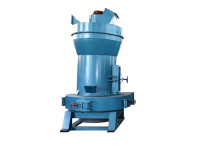
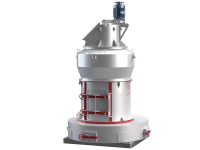
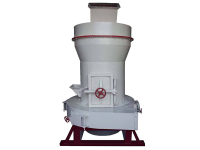
Ultra-fine Grinding Mill
Ultra-fine Grinding Mill
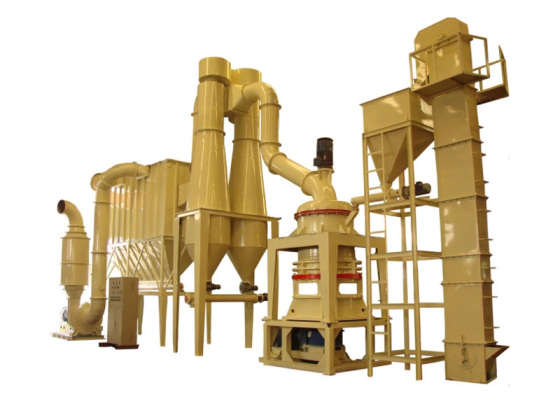
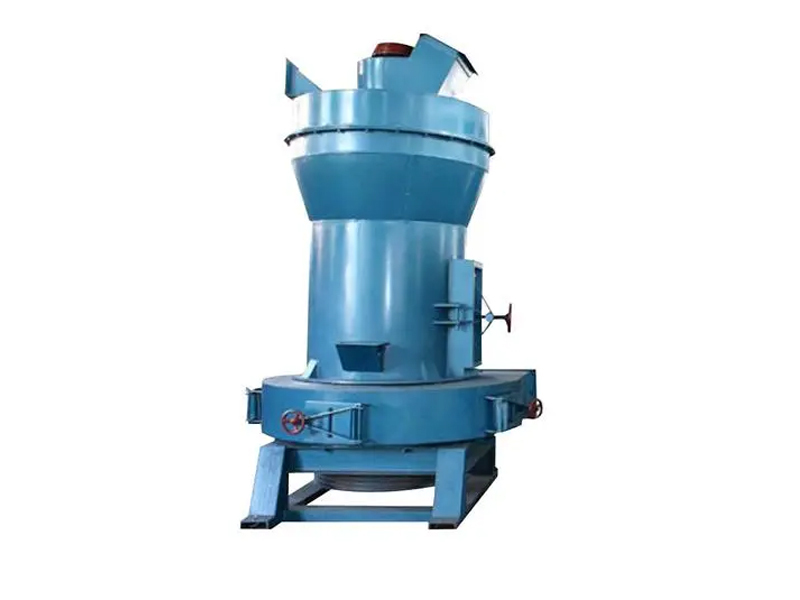
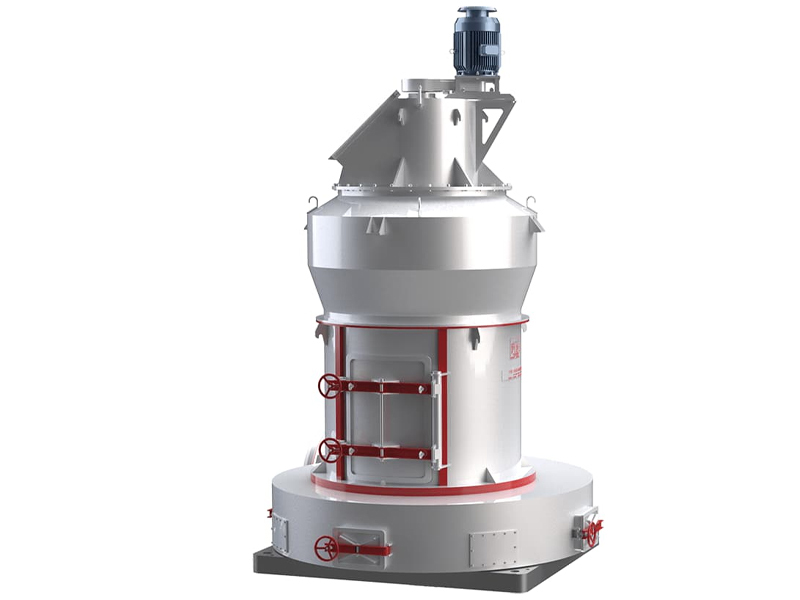
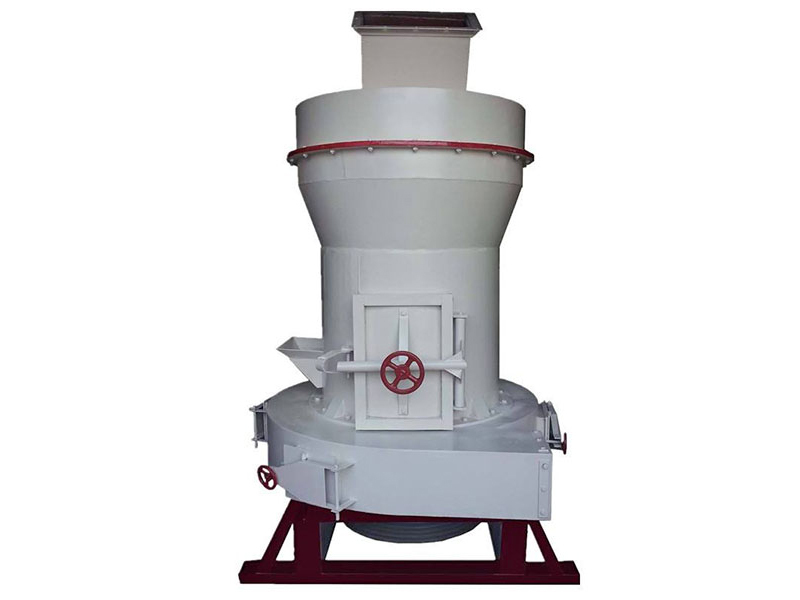
The ultra-fine grinding mill is a core equipment specialized in high-fineness material processing, primarily designed for the ultra-fine grinding of non-metallic minerals. It can process a variety of materials such as barite and calcite, and is widely used in mining, building materials, and other industries. The mill adopts a grinding roller rotation and pressure grinding structure, combined with a precise classification system, to achieve efficient fine grinding through a closed-loop process.
This equipment offers advantages such as precise fineness control, stable and environmentally friendly operation, ease of daily maintenance, and strong adaptability. Leveraging a secondary classification mechanism and energy-saving design, it ensures the production of high-fineness finished products while reducing operational costs, meeting the demands of modern precision production.
- Luoyang Hanfei Power Technology Co., Ltd
- Henan, China
- Possesses complete, stable, and efficient supply capabilities for Mill and their components.
- Information
Ultra-fine Grinding Mill
The ultra-fine grinding mill is an industrial equipment dedicated to high-fineness grinding of materials. It specializes in the ultra-fine grinding of non-metallic minerals and can efficiently process various materials such as barite, calcite, potassium feldspar, limestone, and slag, producing finished products of different fineness according to requirements. For some materials, ultra-high fineness grinding effects can be achieved. This equipment is widely used in multiple fields, including mining, building materials, chemical engineering, and metallurgy. With its precise fine grinding capability, it has become a core piece of equipment for achieving refined material processing and enhancing product added value.
In terms of core structural design, the ultra-fine grinding mill possesses distinct technological advantages. The equipment adopts a core structure where grinding rollers rotate around the main shaft, paired with high-pressure springs for auxiliary pressurization. This allows the grinding rollers to roll tightly against the grinding ring under the dual action of centrifugal force and spring pressure, achieving rapid material refinement through powerful compression. Its grinding efficiency is significantly improved compared to traditional grinding equipment of the same power. Simultaneously, the equipment is equipped with a precise classification system, primarily composed of a classifier, an adjustable airlock structure, and a labyrinth-type pressure relief valve. Through clever airflow circulation design, an efficient bidirectional circulation classification system is established, ensuring the finished product meets the required fineness.
From the perspective of working principle, the ultra-fine grinding mill achieves ultra-fine grinding through a closed-loop process of "grinding-classification-regrinding." After being crushed between the grinding rollers and the grinding ring, the material is sent by the fan into the inner cavity of the classifier housing and then blown into the upper chamber for separation. To ensure the output of high-fineness finished products, an adjustable airlock structure is installed above the classifier's air inlet duct. This structure not only reduces the air pressure within the cavity but also blocks coarse particles from entering the upper chamber, allowing coarse powder to fall back into the main unit for regrinding. Excess air pressure is discharged through the labyrinth-type pressure relief valve, achieving pressure reduction and circulation.
To further enhance grinding fineness, the equipment specially incorporates a secondary classification mechanism. The downward airflow generated by the high-speed rotation of the classifier enters the lower chamber through the conical labyrinth structure, where it converges and collides with the upward airflow. Under the blocking and collision effects of the labyrinth structure, the powder undergoes secondary refinement. The refined fine powder is carried back to the upper chamber by the airflow for re-selection. Finally, qualified fine powder travels with the airflow through the hollow cavity of the classifier and the collection chamber into the cyclone collector, forming the finished product. Excess air pressure generated by the convergence of the upper and lower airflows is discharged through the filter screen's pressure relief holes, achieving bidirectional circulation pressure reduction and ensuring stable operation of the classification system.
The ultra-fine grinding mill features advanced process design and a high degree of system integration. The equipment employs a complete closed-circuit circulation system, integrating functions such as rotary vane classifier separation, pneumatic conveying, and negative pressure operation. This ensures that materials are repeatedly ground inside the mill until the required fineness is reached, significantly improving the qualified rate of the finished product. Additionally, the equipment adopts a multi-compartment structural design, equipped with screening partition devices and micro grinding media. By optimizing material flow velocity and incorporating anti-leakage designs, the process flow is simplified, operational convenience is enhanced, and overall investment and operating costs are reduced.
In terms of performance, this equipment offers high grinding efficiency and precise fineness control. By adjusting relevant parameters of the classifier, the fineness of the finished product can be flexibly controlled to ensure reasonable particle size distribution, meeting the processing needs of various industries. The equipment operates in negative pressure mode, effectively reducing dust leakage and balancing operational environment and environmental protection requirements. At the same time, the equipment runs stably and reliably, with convenient daily maintenance. Focus is primarily on basic tasks such as tightening screws, maintaining the lubrication system, and cleaning vulnerable parts, which greatly reduces downtime for maintenance and improves production efficiency.
Furthermore, the ultra-fine grinding mill exhibits strong adaptability and can process materials within a wide range of hardness and moisture levels. Whether for ore processing after mining or raw material refinement in the building materials and chemical industries, it can be stably adapted. Through reasonable energy-saving design and operational optimization, the equipment achieves significant energy-saving benefits while maintaining high-efficiency production. It aligns with the green and environmental protection requirements of modern industrial production, making it a modern ultra-fine grinding equipment that balances efficiency, stability, and environmental friendliness.