


- Home
- >
- Products
- >
- Rotor Machining
- >
Rotor Machining
Rotor Machining
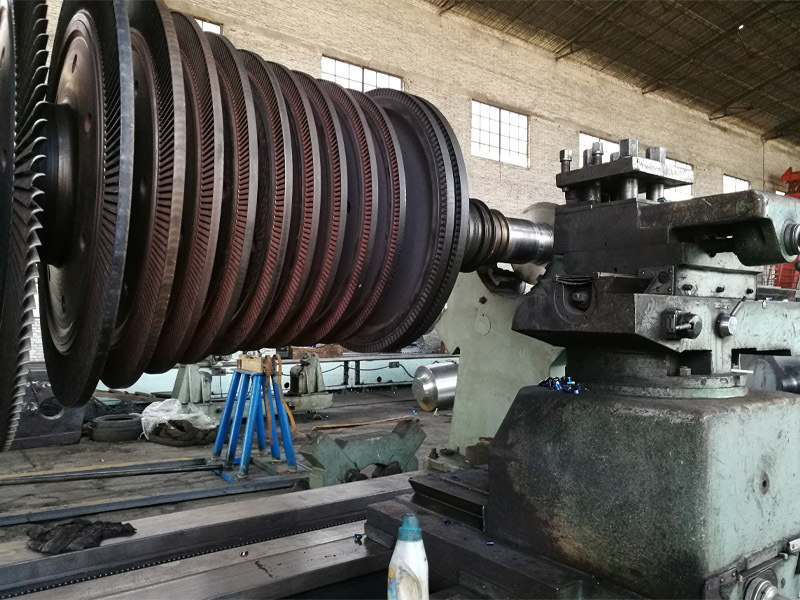
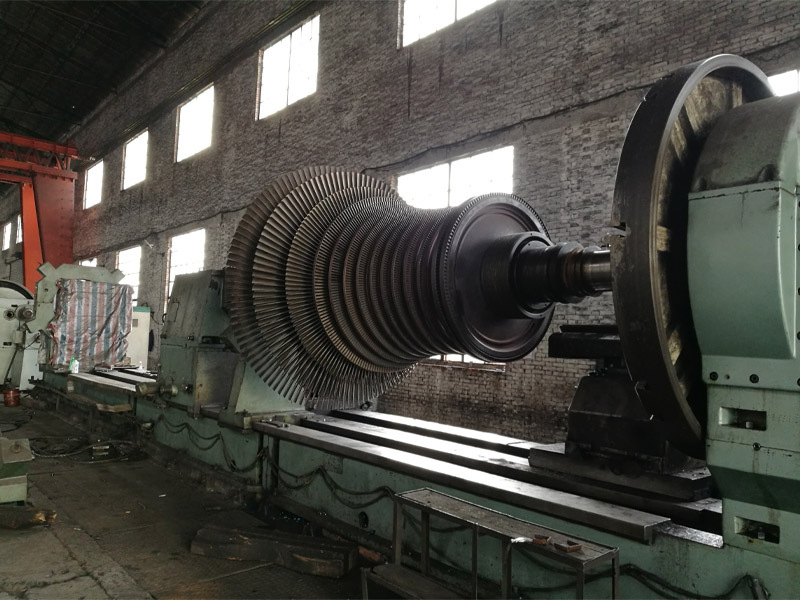
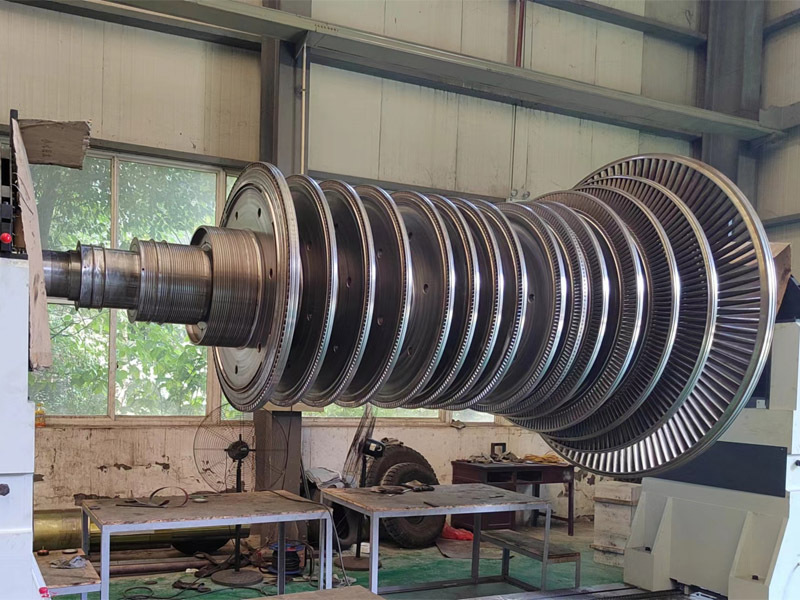
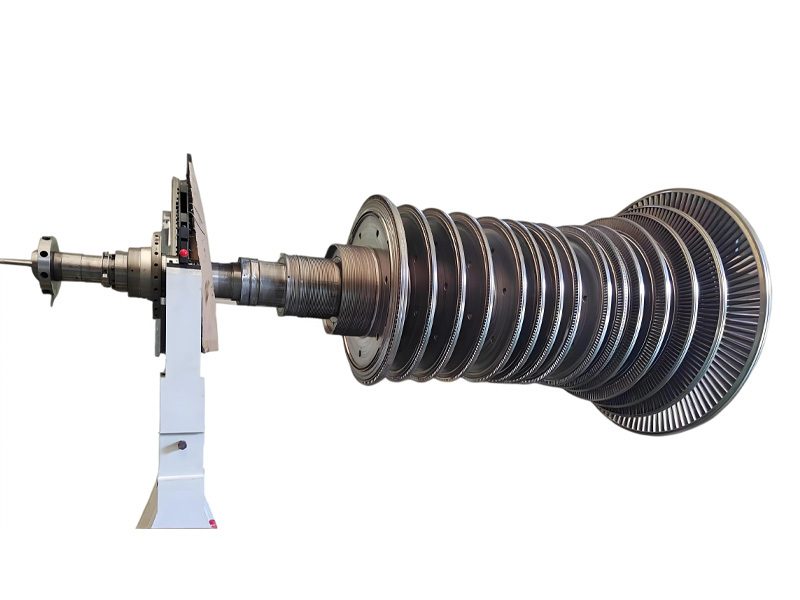
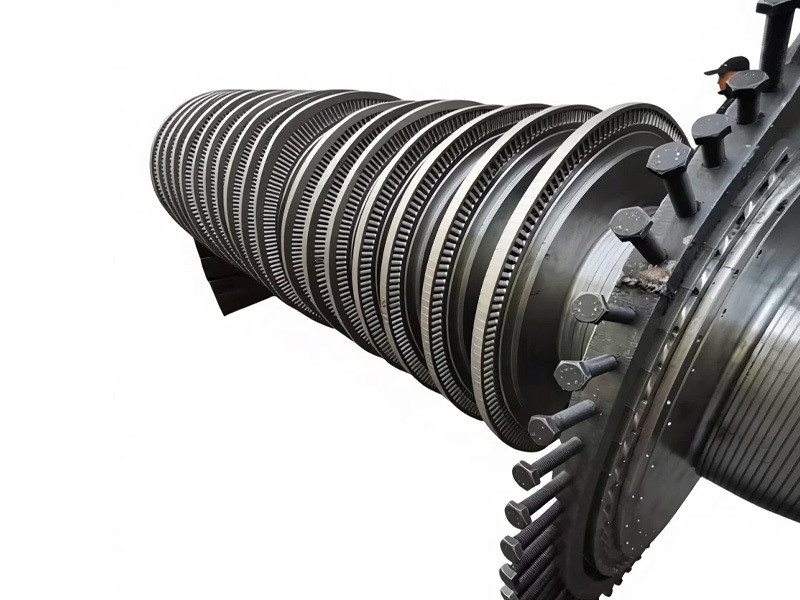
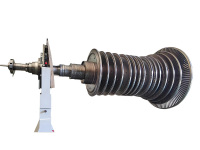
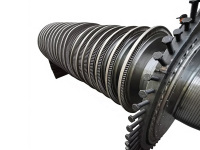
Rotor machining refers to the precision manufacturing process for the core rotating components (such as rotors in electric motors, fans, pumps, steam turbines, etc.) of various rotating machinery. Its technical requirements vary significantly depending on the application scenario.
The rotor is the core rotating component supported by bearings, responsible for energy conversion and power transmission in heavy-duty equipment such as turbo generators and gas turbines. Heavy-duty rotor forgings are typically manufactured through integral die forging using high-strength alloy steels like 30CrNiMoV. They undergo high-temperature press forging to optimize the grain structure and eliminate internal defects, making them suitable for demanding high-temperature, high-pressure, and high-speed operating conditions. Their machining quality directly determines the operational stability and service life of the equipment.
- Luoyang Hanfei Power Technology Co., Ltd
- Henan, China
- Possesses complete, stable, and efficient supply capabilities for Cutting Of Metal Products
- Information
Rotor Machining
A rotor is a rotating body supported by bearings and serves as the core rotating component in power machinery and operational machinery. Objects without their own rotating shaft can also be considered rotors after being rigidly connected or fitted with an additional shaft. In heavy-duty equipment such as turbo generators, gas turbines, and turbo compressors, the rotor, as the core high-speed rotating component, undertakes the critical responsibilities of energy conversion and power transmission. Its machining quality directly determines the equipment's operational stability, power output efficiency, and service life. Heavy-duty rotor forgings are predominantly manufactured using high-strength alloy steels through integral forging, making them suitable for harsh operating conditions involving high temperatures, high pressures, and high speeds. They are fundamental core components ensuring the long-term reliable operation of heavy-duty equipment.
Material selection and blank forging are the core prerequisites for machining heavy-duty rotor forgings, requiring a balance of high strength, high toughness, and fatigue resistance. Common materials for turbo generator rotor forgings include high-strength alloy steels such as 30CrNiMoV and 26Cr2Ni4MoV. After forging and heat treatment, these materials exhibit excellent comprehensive mechanical properties, enabling them to withstand the immense centrifugal forces and vibrational impacts during high-speed rotation. Blanks are prepared using integral die forging processes, where ingots are hot forged using hydraulic presses. This process breaks down the as-cast metal structure, refines the grain size, enhances the forging density and structural uniformity, and simultaneously eliminates internal defects like porosity and shrinkage cavities, laying a solid structural foundation for subsequent machining and long-term equipment operation.
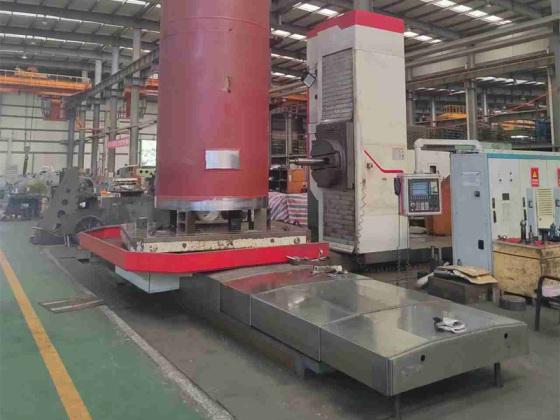
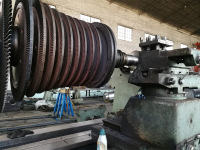
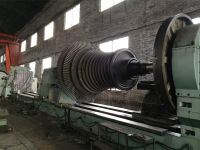
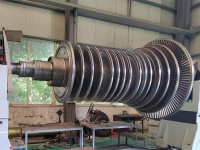
The machining process for heavy-duty rotor forgings is complex and demands extremely high precision, generally following the standardized sequence of "blank pretreatment - rough machining - semi-finishing - heat treatment - finishing - non-destructive testing." In the blank pretreatment stage, the forging undergoes normalizing to relieve forging stresses, homogenize the microstructure, and reduce the risk of deformation during subsequent machining. Rough machining focuses on removing significant material allowance and initial shaping, utilizing large CNC lathes and floor-type boring and milling machines to create the rotor's basic profile, including key sections like the journal, flange, and blade grooves, while leaving appropriate machining allowance to account for deformation during subsequent heat treatment.
Heat treatment is a critical process for enhancing the performance of heavy-duty rotor forgings, requiring multi-stage composite processes tailored to the material and operating conditions. Turbo generator rotor forgings typically undergo quenching and tempering. This combination process provides the forging with a good balance of strength and toughness, meeting the load-bearing requirements under high-speed rotation. For critical areas of the rotor, surface treatments like carburizing or nitriding are also necessary to increase surface hardness and wear resistance while maintaining core toughness, resisting wear and fatigue damage. After heat treatment, aging treatment is required to further relieve internal stresses, ensuring dimensional stability of the rotor and preventing deformation during subsequent machining or operation.
Finishing is the core stage for guaranteeing the accuracy of heavy-duty rotor forgings, relying on high-precision CNC equipment and precise measurement technology. Large CNC cylindrical grinders and crankshaft grinders are used to grind key areas such as the rotor journal and fitting surfaces, controlling dimensional tolerances within ±0.005mm while strictly ensuring geometric tolerances like coaxiality and roundness meet standards to avoid eccentric vibration during high-speed rotation. For complex structures like rotor blade grooves and keyways, five-axis machining centers are used for precise milling, ensuring dimensional accuracy and assembly precision to meet the installation requirements for blades and connecting components.
Non-destructive testing and quality control are integral throughout the entire machining process, serving as key guarantees for the qualified final inspection of heavy-duty rotor forgings. Methods such as ultrasonic testing, magnetic particle testing, and penetrant testing are used during machining to comprehensively inspect for internal cracks, inclusions, microstructural defects, and surface damage in the forgings. Precision equipment like coordinate measuring machines (CMM) and roundness testers are used for comprehensive inspection of machining dimensions and geometric tolerances, ensuring compliance with design standards. Furthermore, for high-end products like turbo generator rotors, dynamic balancing tests are essential. These tests eliminate eccentric mass by adjusting counterweights, preventing mechanical failure caused by resonance during high-speed operation and ensuring equipment operational safety. As heavy-duty equipment evolves towards larger size and higher efficiency, rotor forging machining is upgrading towards higher precision, intelligence, and green manufacturing, providing more reliable core components for the energy, power, and other sectors.