

Bearing Housing Processing
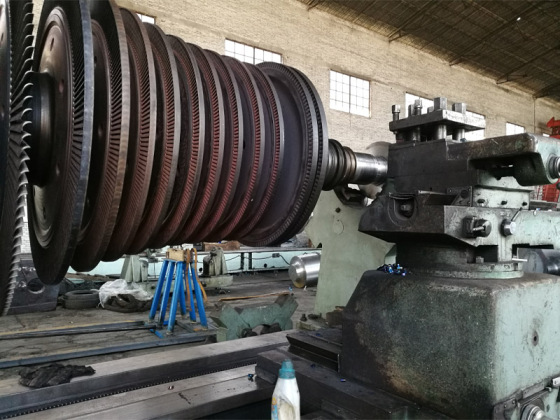
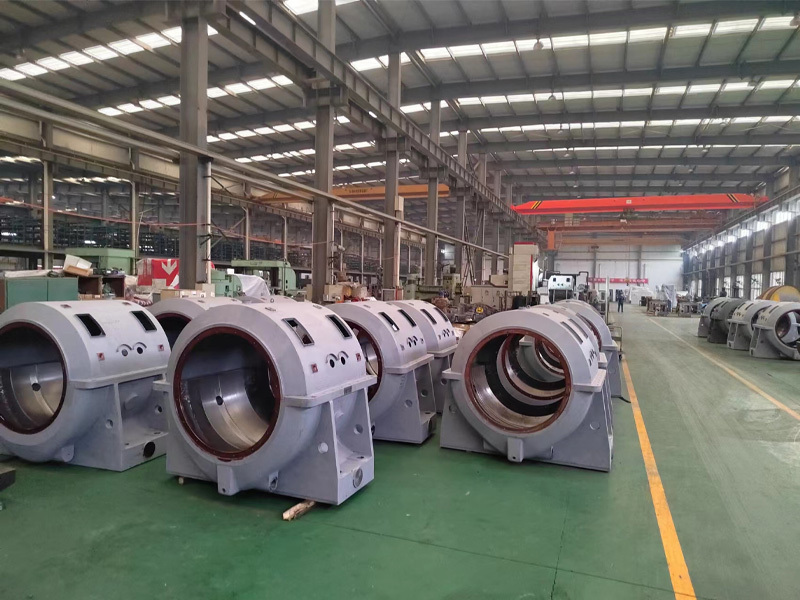
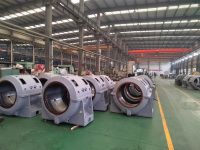
A bearing housing is a critical supporting component in mechanical equipment. Its primary functions are to house bearings, position rotating parts, transmit operational loads and vibrations, and ensure the stable operation of rotating systems. Its applications range from general machinery to heavy-duty equipment such as steam turbines. Bearing housings specifically designed for steam turbines face more stringent requirements in terms of structure, precision, and operational adaptability, as they must withstand high temperatures, high pressures, and fluctuating loads.
The machining process must consider material properties and application requirements, typically involving stages such as blank preparation, multi-phase machining, heat treatment, and final inspection. Particular focus is placed on the precision control of key surfaces, most notably the bearing bore. Leveraging CNC equipment and precise processing techniques, these housings balance the efficiency required for general components with the rigorous standards demanded for specialized steam turbine parts, thereby establishing a solid foundation for stable equipment operation.
- Luoyang Hanfei Power Technology Co., Ltd
- Henan, China
- Possesses complete, stable, and efficient supply capabilities for Cutting Of Metal Products
- Information
As a core supporting component of mechanical equipment, the primary function of a bearing housing is to house the bearing itself, precisely position rotating components, restrict their radial and axial displacement, and transmit operational loads and vibrations, thereby providing fundamental assurance for the stable operation of rotating systems. This component finds applications across a wide range of scenarios, including general machinery, machine tool equipment, wind power installations, and heavy-duty power equipment like steam turbines. Its machining accuracy directly determines the operational stability, transmission efficiency, and service life of the entire machine. Bearing housings specifically designed for steam turbines, which must withstand high-temperature, high-pressure environments and long-term fluctuating loads, face more stringent requirements in terms of structural design complexity, dimensional specifications, and operational condition tolerance. This category represents a high-end, specialized segment within bearing housing manufacturing.
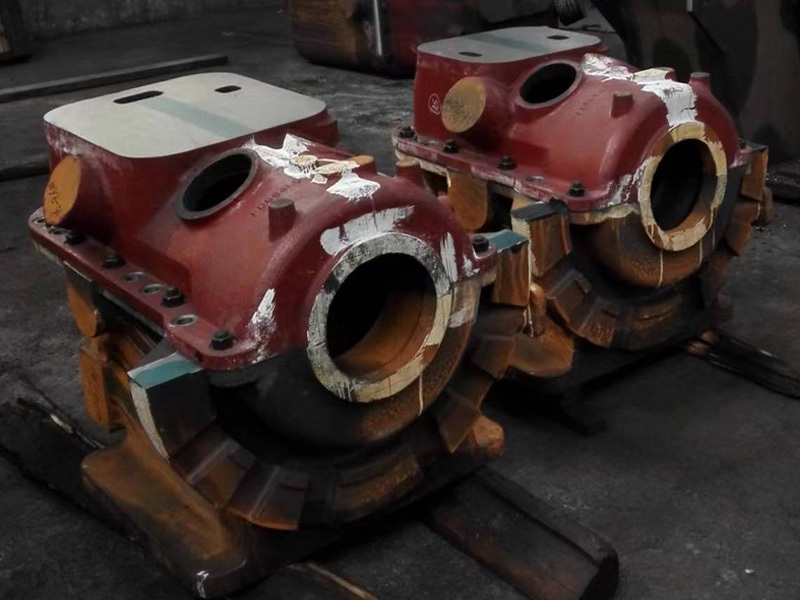
Material selection for bearing housings requires a multi-dimensional balance considering application suitability, mechanical properties, and manufacturing cost. For general machinery applications, high-strength gray cast iron is the mainstream choice due to its excellent vibration damping, noise reduction, and machinability. For medium-to-high pressure applications and steam turbine requirements, nodular cast iron or alloy steel are more suitable. Nodular cast iron enhances structural impact toughness, while alloy steel castings or forgings, after specific treatments, can effectively resist damage under extreme operating conditions. Sand casting is the conventional method for blank preparation. For critical parts of steam turbine bearing housings, integral die forging technology is employed. By precisely controlling parameters like pouring temperature and forging pressure, internal defects such as porosity and inclusions are eliminated, and metal grain alignment is optimized, providing a stable structural foundation for subsequent machining.
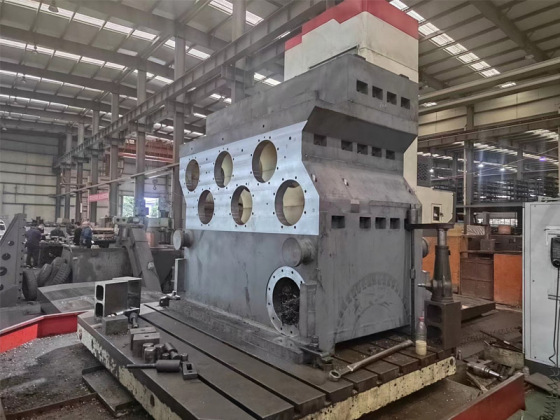
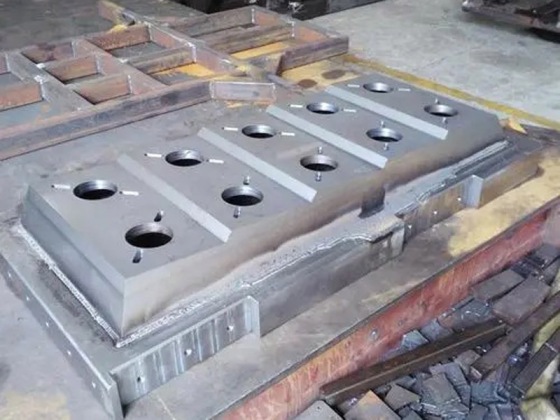
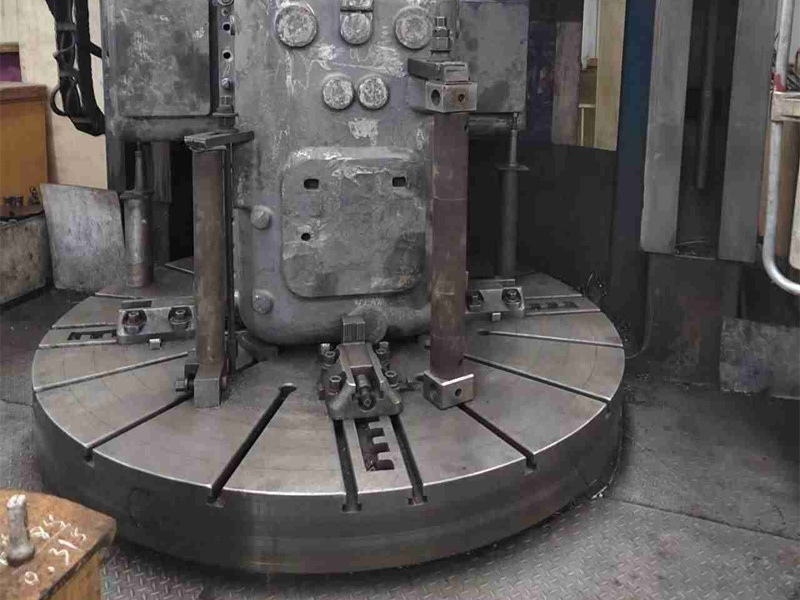
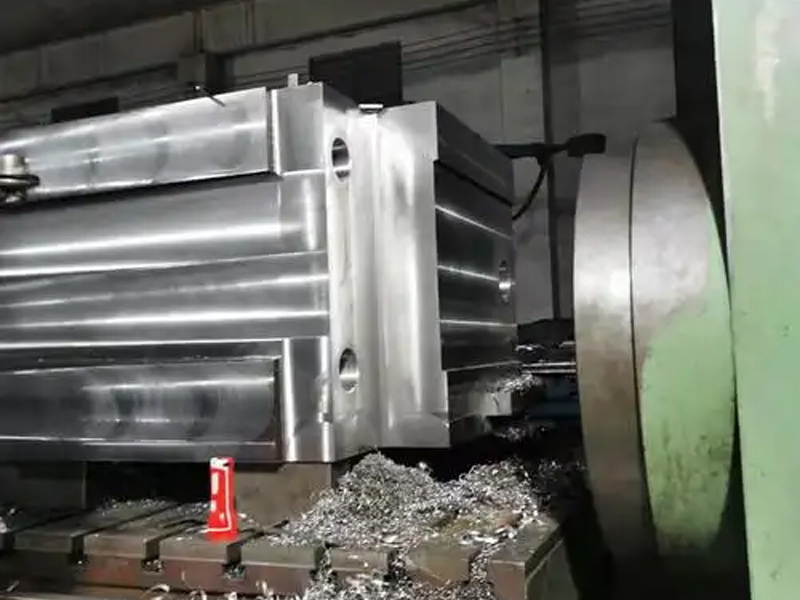
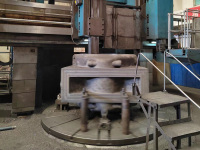
Bearing housing machining follows a standardized process system comprising six sequential steps: blank pretreatment, rough machining for shaping, semi-finishing for refinement, heat treatment for strengthening, finishing for final dimensions, and finished product inspection. Process control at each stage directly impacts the final product quality. During the blank stage, based on casting or forging characteristics, aging treatment or normalizing is applied to fully relieve internal stresses, preventing deformation and cracking issues during subsequent machining and use. Surface treatment is also performed to remove scale, flash, and machining residues. The rough machining stage utilizes large CNC equipment to rapidly remove excess material, forming the component's basic shape, mounting surfaces, and preliminary bore locations, while leaving appropriate machining allowance based on material properties and heat treatment requirements.
The heat treatment stage is tailored to the bearing housing material and application scenario, serving as the core step for enhancing the component's mechanical properties and dimensional stability. General cast iron materials undergo annealing to optimize the internal structure and reduce residual stress. Alloy steels and housings for steam turbines require quenching and tempering. This combined process achieves an optimal balance of strength and toughness, enhancing the component's fatigue resistance. A secondary aging treatment is often necessary after heat treatment. By precisely controlling temperature and soaking time, stresses induced during heat treatment are minimized, ensuring the bearing housing maintains dimensional accuracy under long-term operation and temperature fluctuations, preventing structural deformation.
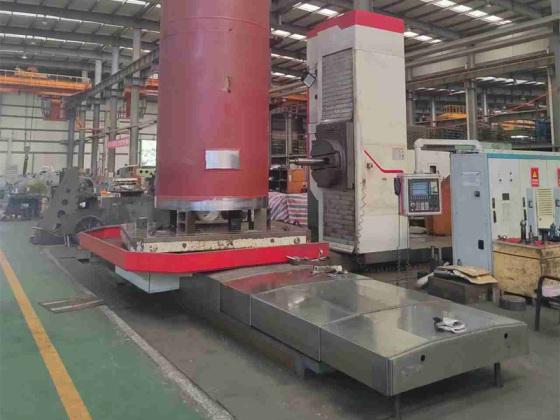
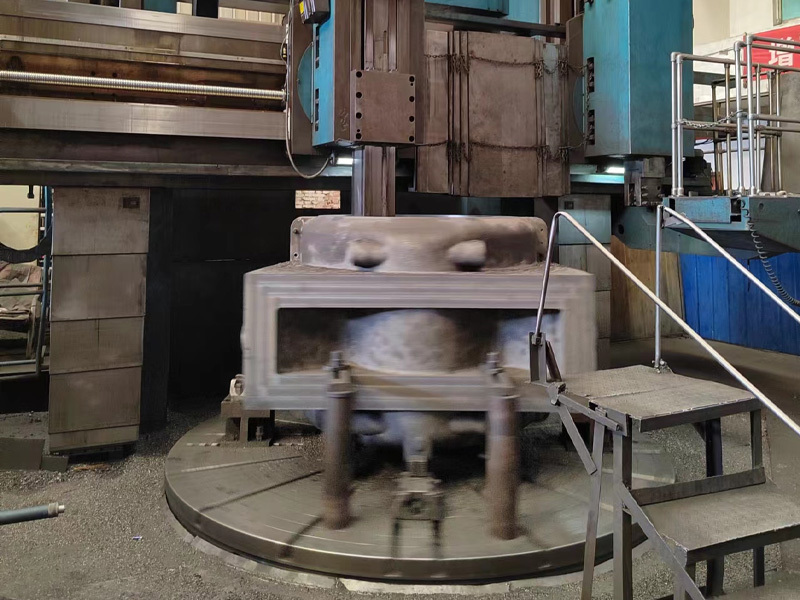
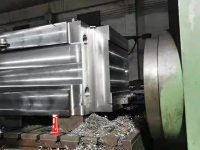
Finishing focuses on precision control of key mating surfaces, which is crucial for ensuring the compatibility of the bearing housing with other components. Specialized equipment like high-precision CNC boring machines and planer-type grinding machines are used for fine machining of core areas such as the bearing bore, locating rabbets, and datum planes. The bearing bore, as the core mating structure, requires strict control of dimensional and geometric tolerances. For steam turbine-specific housings, bore tolerances must be controlled at the micrometer level, while also ensuring roundness and coaxiality meet standards to minimize eccentric vibration during rotation. For complex internal structures like oil passages and cooling channels, five-axis machining equipment ensures precise forming, guaranteeing passage smoothness and positional accuracy to meet lubrication and cooling needs during equipment operation.
Final treatment and inspection are the concluding stages of bearing housing machining, directly determining whether the product meets specifications for shipment. After machining, internal chips and surface contaminants are thoroughly cleaned. Mating surfaces are ground and polished to improve surface finish and contact. During the assembly stage, the clearances for bearings and seals are precisely adjusted to ensure smooth rotation without binding and to achieve sealing performance standards. Finally, comprehensive checks of critical dimensions, geometric tolerances, and surface quality are performed using precision measuring equipment. Products for high-end applications like steam turbines require additional non-destructive testing to identify internal hidden defects. Currently, bearing housing machining is advancing towards digitalization and intelligence. Leveraging smart manufacturing equipment and simulation technology, it aims to balance production efficiency for general products with the rigorous standards for specialized heavy-duty components, thereby enabling upgrades in the equipment manufacturing industry.