


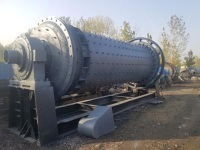
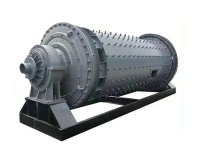
Rod Mill
Rod Mill
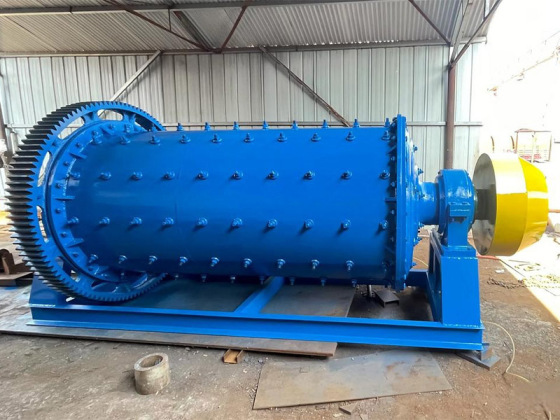
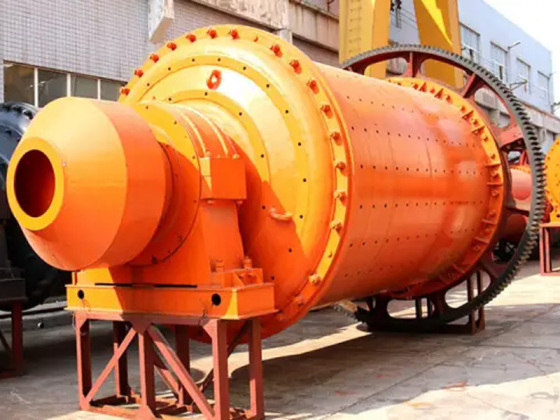
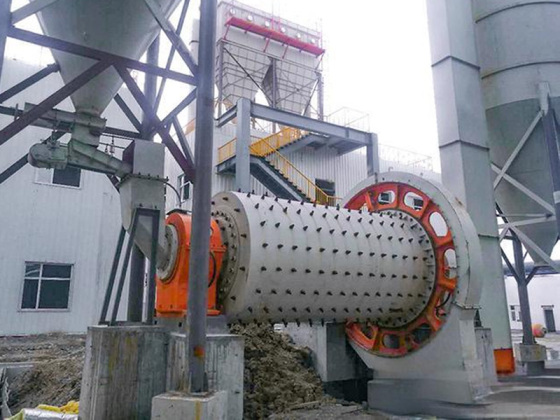
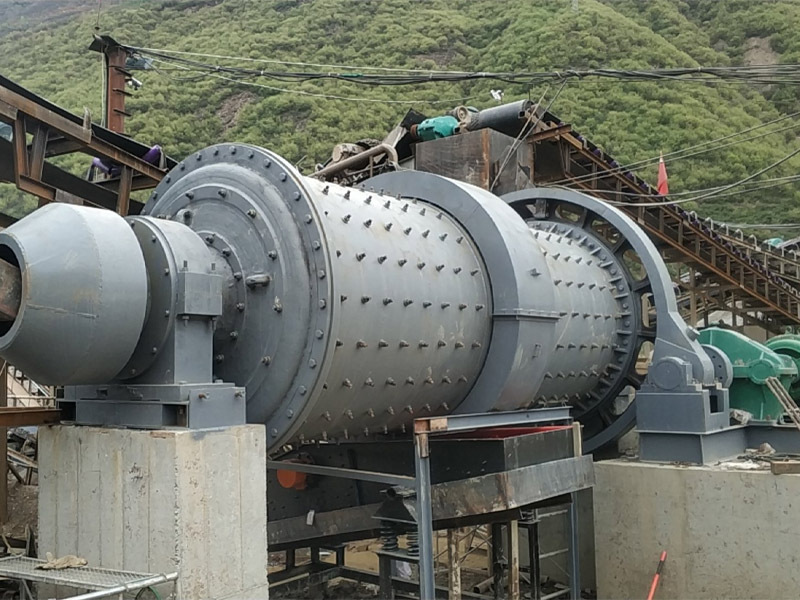
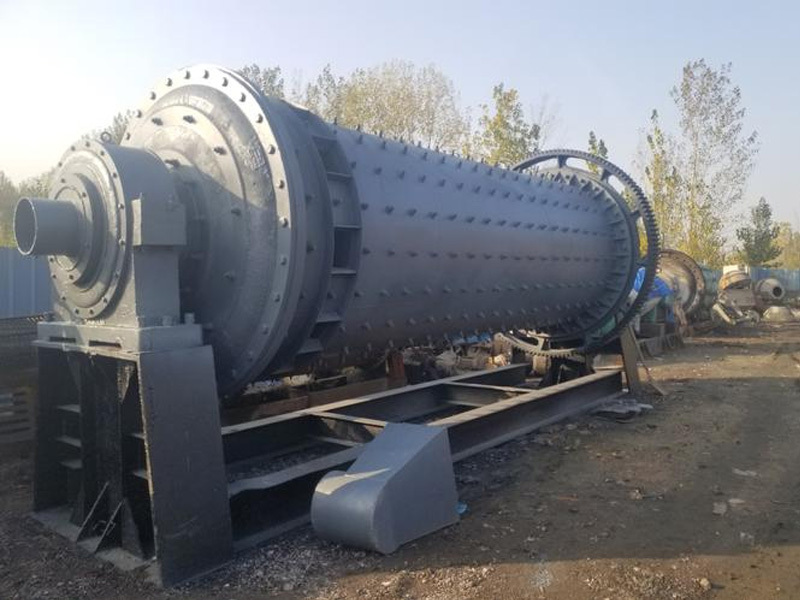
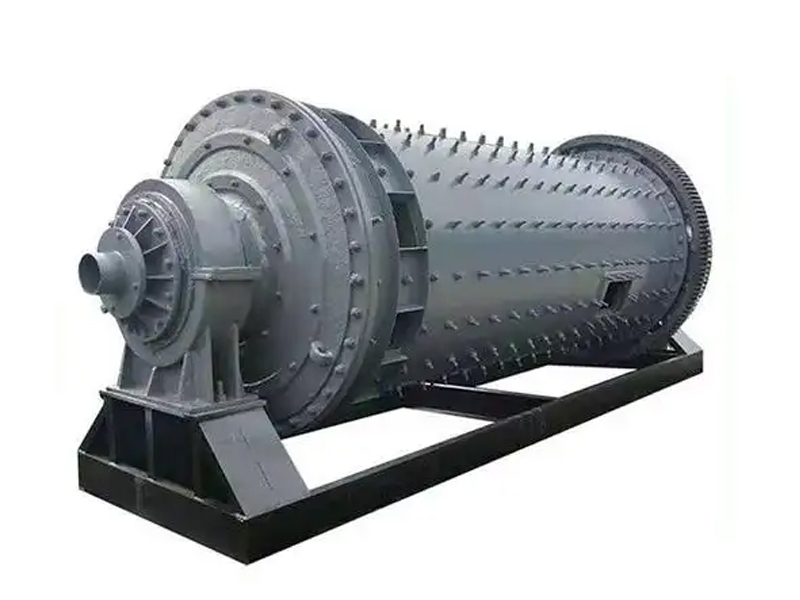
The rod mill is a key grinding equipment that uses steel rods as the grinding media. Primarily designed as a wet overflow type, it is mainly used for primary open-circuit grinding operations and finds wide application in artificial sand production, mineral processing, chemical engineering, and power generation industries. The equipment consists of core components such as the motor and main reducer. Driven by the transmission device, the cylinder rotates, causing the steel rods to cascade and grind the material through impact and abrasion. The specifications for the grinding rods are strictly controlled: their length does not exceed 7 meters, and their diameter ranges from 75 to 150 mm.
This equipment offers significant advantages. It saves over 40% more power compared to older models and produces a product with uniform particle size and low slime content. Utilizing line-contact grinding technology, it greatly enhances discharge uniformity and output capacity. Suitable for processing various ores with a Mohs hardness ranging from 5.5 to 12, it can meet diverse operational requirements, making it an efficient and stable equipment for material grinding.
- Luoyang Hanfei Power Technology Co., Ltd
- Henan, China
- Possesses complete, stable, and efficient supply capabilities for Mill and their components.
- Information
Rod Mill
A rod mill is a type of mill that uses steel rods loaded inside the cylinder as the grinding media. Its core feature lies in utilizing steel rods as the grinding medium to achieve material comminution. The equipment is commonly designed as a wet overflow type and can serve as a primary open-circuit grinding unit. It is widely applied in primary grinding stages across various fields, including artificial sand production, ore processing in beneficiation plants, raw material grinding in chemical plants, and material processing in the power sector. It is a key piece of equipment for deep grinding after material crushing.
In terms of its main structure, the rod mill has a well-integrated construction system. Its core components include the motor, main reducer, transmission section, cylinder section, main bearings, slow-speed drive section, feeding section, discharge section, ring seal, thin oil lubrication station, gear spray lubrication device for the large and small gears, and base section, among others. The main reducer employs a parallel-shaft, hard-gear design, offering stable and reliable transmission performance, which provides the core power assurance for the normal operation of the equipment. All components work in coordination to achieve continuous material grinding.
The working principle of the rod mill is based on the mechanical force exerted by the grinding media. The cylinder rotation is driven through two transmission methods:
Firstly, an asynchronous motor is connected via the reducer to a pinion gear, which directly drives the surrounding large gear to rotate at a reduced speed, thereby driving the rotary section.
Secondly, a low-speed synchronous motor directly drives the cylinder rotation through the surrounding large gear via reduced-speed transmission.
The cylinder contains an appropriate quantity of steel rods as grinding media. Under the combined action of centrifugal force and friction, the rods are lifted to a certain height and then fall in a cascading or cataracting motion. The material to be ground is continuously fed into the cylinder through the feed section (ore inlet). It is crushed under the impact and abrasion of the moving rods. The ground product is finally discharged from the mill by the force of overflow and continuous feeding, proceeding to the next processing stage. It is noteworthy that when ore is fed into the rod mill, coarse particles concentrate near the feed end, while fine particles distribute toward the discharge end. This causes the rod charge to be in an inclined state rather than maintaining perfect parallelism during operation, which is an important reason why the rod length cannot be excessively long.
Generally, rod mills are mainly classified into three types: overflow rod mills, end peripheral discharge rod mills, and center peripheral discharge rod mills. Different types can be adapted to various operational requirements.
As the core grinding media, the grinding rods have specific specifications: their length should not exceed 7 meters, as excessively long rods are prone to tangling—hence no rod mills in practical use feature overly long rods. The rod diameter ranges from 75 to 150 mm.
Additionally, grinding rods must possess sufficient rigidity and hardness to ensure they remain straight and unbent during use. The material should not be overly brittle, preventing breakage into fragments before being worn down to a sufficiently small diameter. However, when worn down to a sufficiently small diameter, they should break into small pieces for easy discharge from the mill. If the rod material is too soft, it is prone to bending during cylinder rotation, leading not only to premature rod failure but also causing tangling issues, which increases the difficulty and time required for mill cleaning.
Compared to traditional grinding equipment, rod mills possess distinct process characteristics.
1.they save power, consuming over 40% less energy than older models, effectively reducing production energy costs.
2.they produce a product with uniform particle size, containing less coarse material and slime. The particle size distribution curve of a rod mill operating in open circuit is nearly identical to that of a ball mill operating in closed circuit.
3.they offer uniform discharge and high throughput. By employing advanced controllable feed and discharge rod mill technology and matching suitable grinding media based on material characteristics, the traditional surface-contact grinding of ball mills is transformed into line-contact grinding. This significantly improves the uniformity of discharge particle size and equipment throughput. Moreover, they are suitable for grinding ores with a Mohs hardness ranging from 5.5 to 12, demonstrating wide adaptability.