

- Home
- >
- Products
- >
- Reaction Turbine
- >
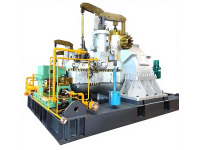
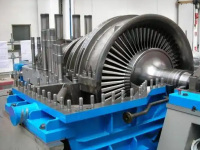
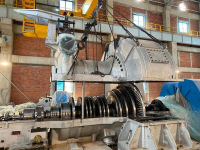
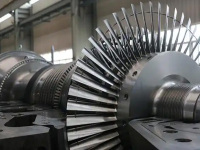
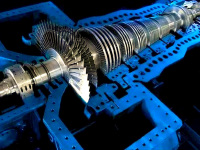
Reaction Turbine
Reaction Steam Turbine
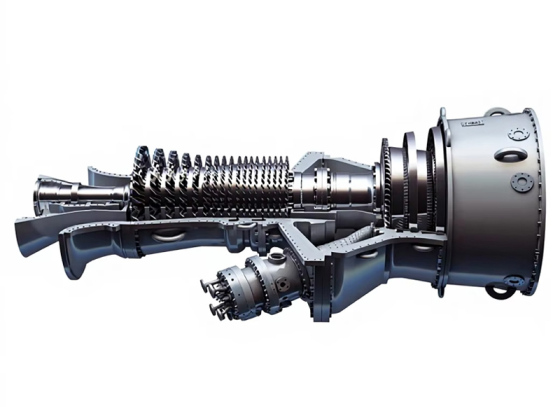
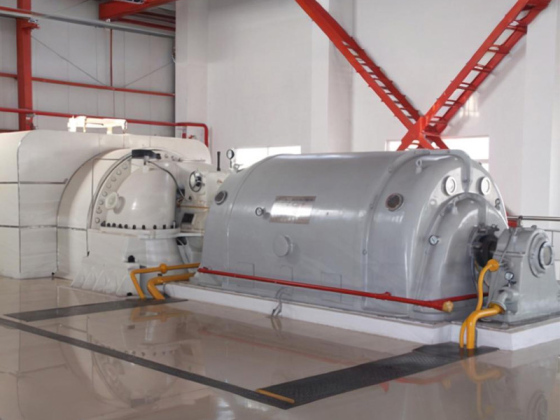
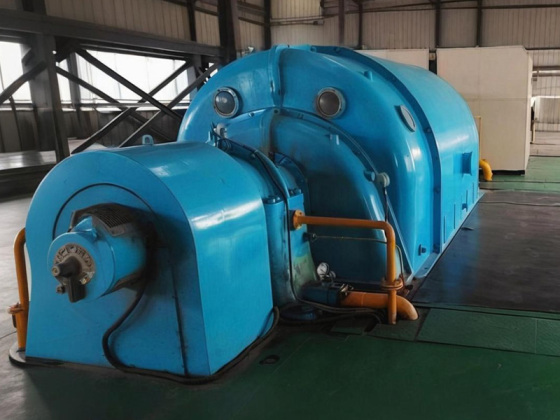
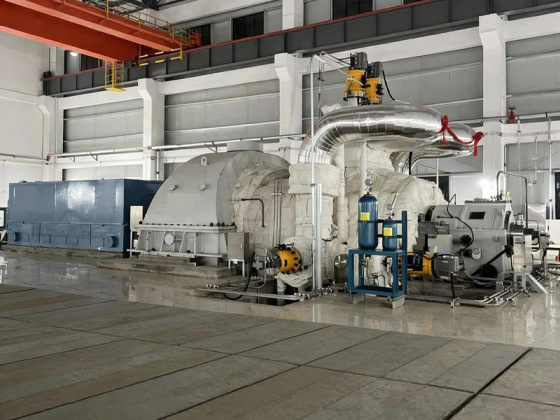
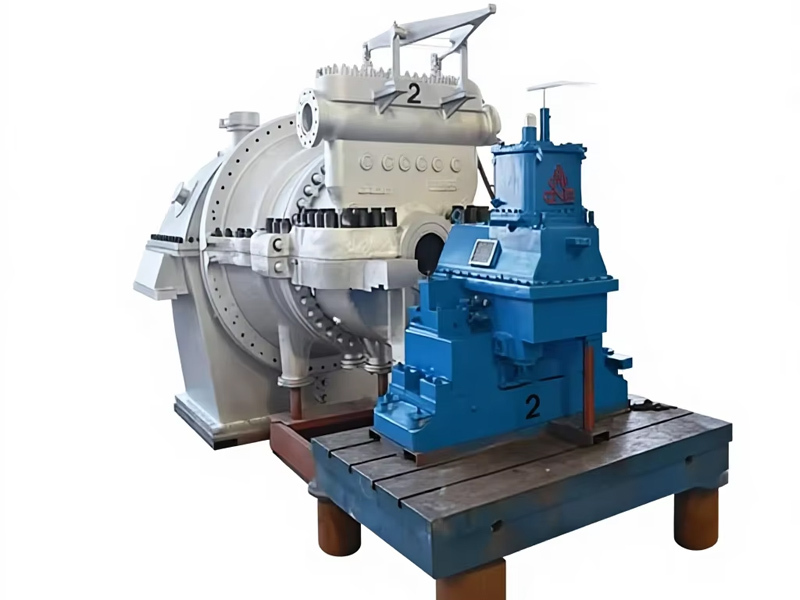
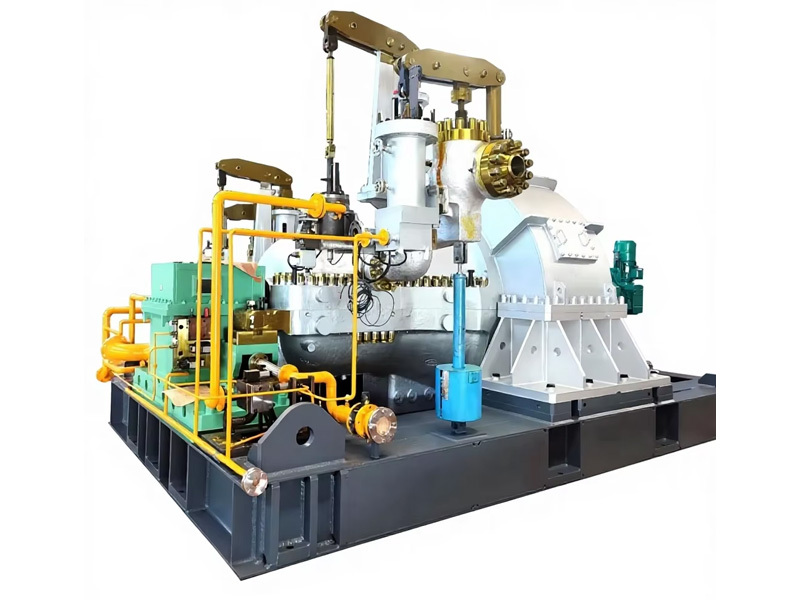
A reaction steam turbine is a prime mover that continuously converts the thermal energy of steam into rotational mechanical energy. Its core function is to drive the rotor rotation to perform work through the continuous expansion of steam within both the stationary and moving blades.
Regarding its working principle, steam expands and accelerates within the stationary blade cascades (nozzles), where pressure decreases and velocity increases, generating an impulse force that drives the moving blade cascades. Subsequently, the steam continues to expand within the moving blade cascades, not only changing the flow direction but also accelerating due to the reaction force. This causes the moving blades to simultaneously bear both impulse and reaction forces, thereby achieving efficient energy conversion.
- Luoyang Hanfei Power Technology Co., Ltd
- Henan, China
- Possesses complete, stable, and efficient supply capabilities for steam turbines and their components.
- Information
- Download
Reaction Steam Turbine
A reaction steam turbine refers to a turbine in which steam expands not only in the nozzles but also within the moving blades. The moving blades of a reaction turbine are subjected not only to the force generated by the impact of the steam flow but also to the force produced by the expansion and acceleration of steam within the blades themselves.
In a reaction steam turbine, steam expands and accelerates not only in the nozzles but also as it flows through the moving blade passages. This means that within the moving blade cascades, the direction of the steam flow changes, and its relative velocity also increases. Consequently, the moving blades are acted upon both by the impulse force from the high-velocity steam jet exiting the nozzles and by the reaction force from the steam leaving the moving blade cascades. In other words, the reaction steam turbine utilizes both impulse and reaction principles to perform work.
A reaction steam turbine is a type of steam-powered machinery. Its working principle is based on the expansion of steam occurring in both the stationary blades (nozzles) and the moving blades, harnessing both the impulse force and the reaction force of the steam to drive the rotor's rotation.
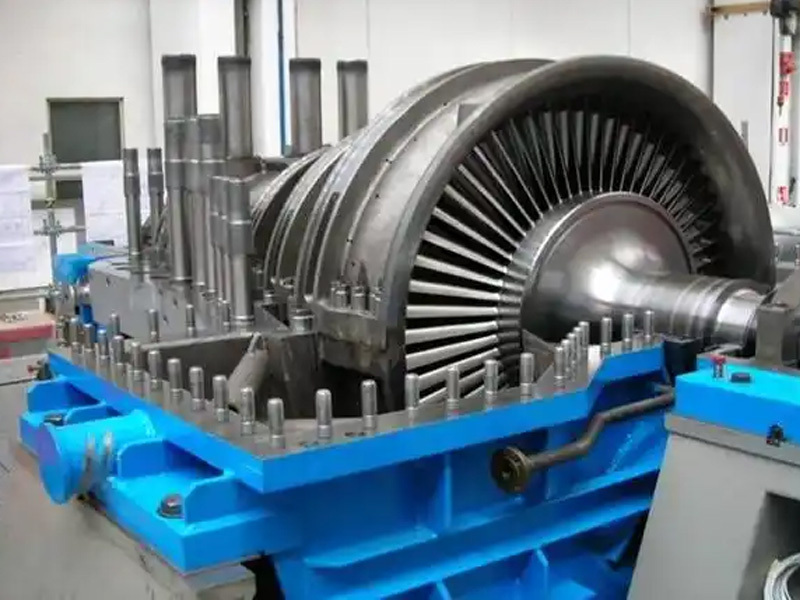
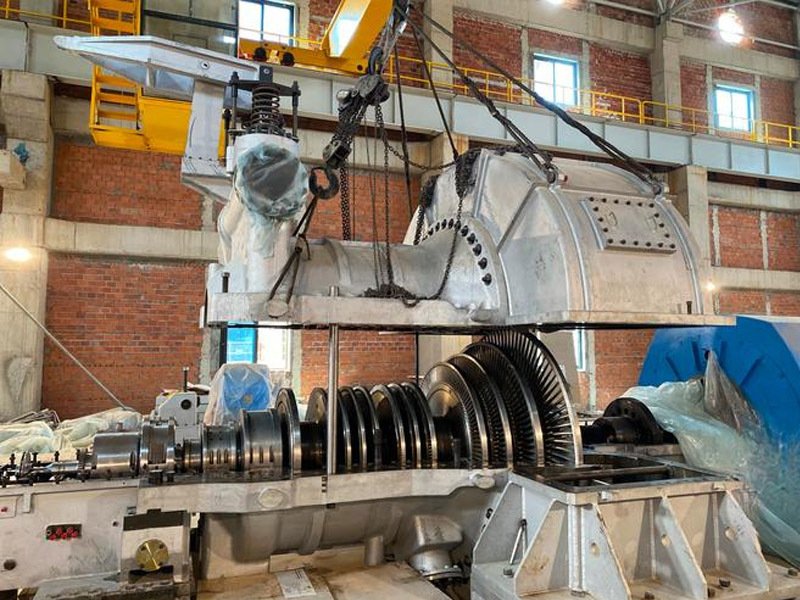
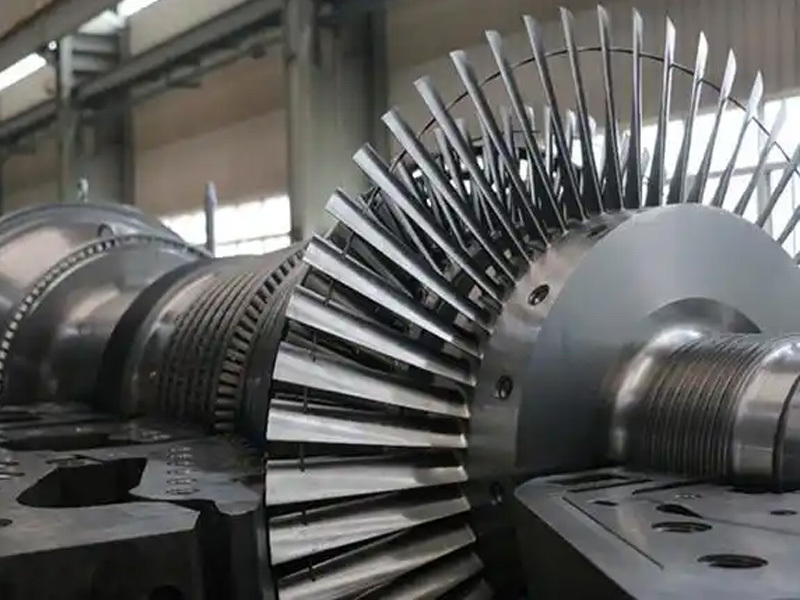
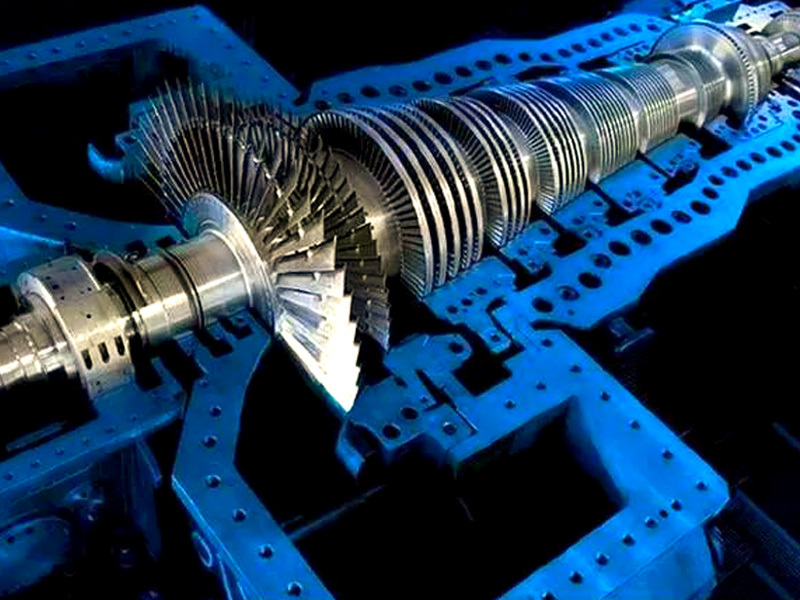
Working Principle and Structural Features: In a reaction steam turbine, steam first expands and accelerates within the stationary blade cascades, resulting in a pressure drop and an increase in velocity. It then enters the moving blade cascades, where the steam continues to expand. This expansion not only changes the flow direction, generating an impulse force, but also, due to the acceleration caused by expansion, produces a reaction force. These two forces work together to drive the rotor and perform work. This design results in a pressure difference across the two sides of the moving blades. Therefore, the rotor typically employs a drum-type structure to avoid excessive axial thrust, and it is often equipped with a balance piston to counteract this thrust. Structurally, reaction steam turbines can be divided into axial-flow types (where steam flows axially, and blades are mounted on a drum) and radial-flow types (where steam flows radially, with two rotors rotating in opposite directions).
Comparison with Impulse Steam Turbines: The main distinction between reaction and impulse turbines lies in the expansion process. In impulse turbines, steam expansion occurs primarily in the stationary blades, with almost no expansion in the moving blades. In contrast, in reaction turbines, expansion is nearly equal in both the stationary and moving blades. Consequently, reaction turbines offer higher stage efficiency. However, they generate greater axial thrust, usually cannot operate with partial steam admission, and often use an impulse stage for the first stage.
The advantages of reaction steam turbines are mainly reflected in the following aspects:
1.Higher Stage Efficiency: Steam expands in both the stationary and moving blades, utilizing both impulse and reaction forces to perform work. This allows for a more rational velocity triangle design and results in lower flow losses. Therefore, the single-stage efficiency is typically about 2%-3% higher than that of impulse steam turbines.
2.Similar Blade Structure Reduces Manufacturing Costs: The cross-sectional shapes of the moving and stationary blades are essentially identical. This symmetry simplifies blade design and manufacturing processes, facilitating mass production and reducing spare parts costs.
3.Better Performance at Partial Loads: Due to the uniform distribution of the steam expansion process across stages, reaction steam turbines can maintain relatively high efficiency even under non-full load conditions, exhibiting stronger adaptability to variable load operation.
4.Suitable for Medium and Low-Pressure Conditions: Their design characteristics ensure stable operation under medium and low-pressure steam conditions. Furthermore, the multi-stage structure facilitates the use of technologies like reheat to further enhance overall efficiency.
5.Axial Thrust Can Be Managed by a Balance Piston: Although the axial thrust is significant, it can be effectively counteracted through designs such as the drum structure and balance piston, ensuring operational stability.