


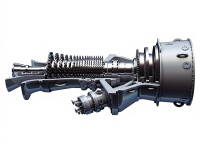
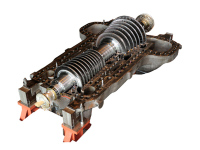
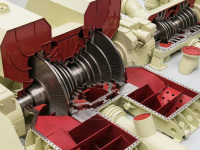
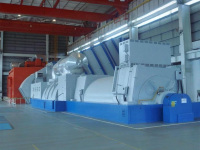
Impulse Reverse Combined Turbine
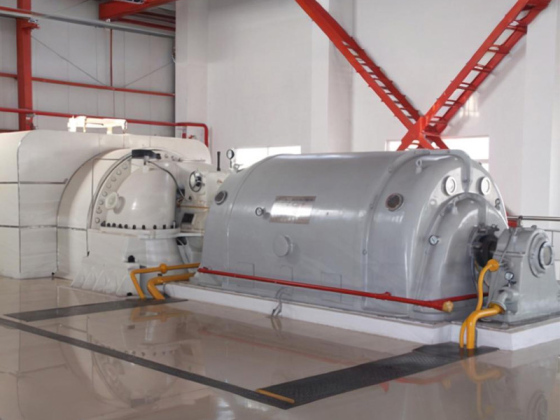
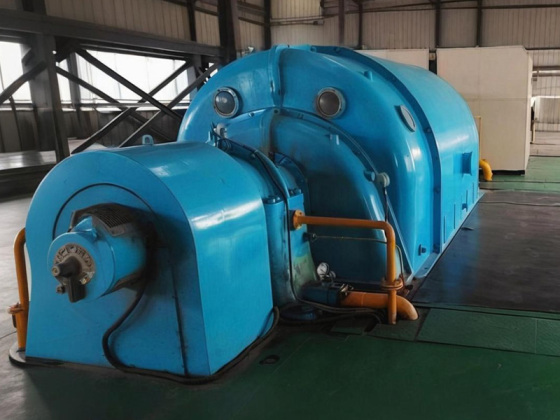
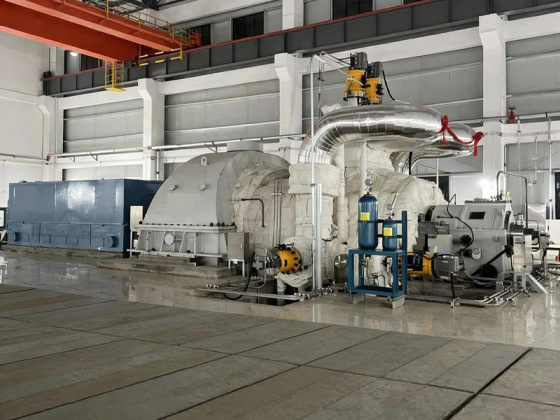
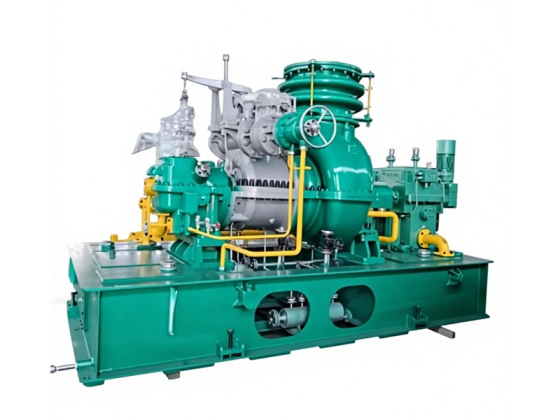
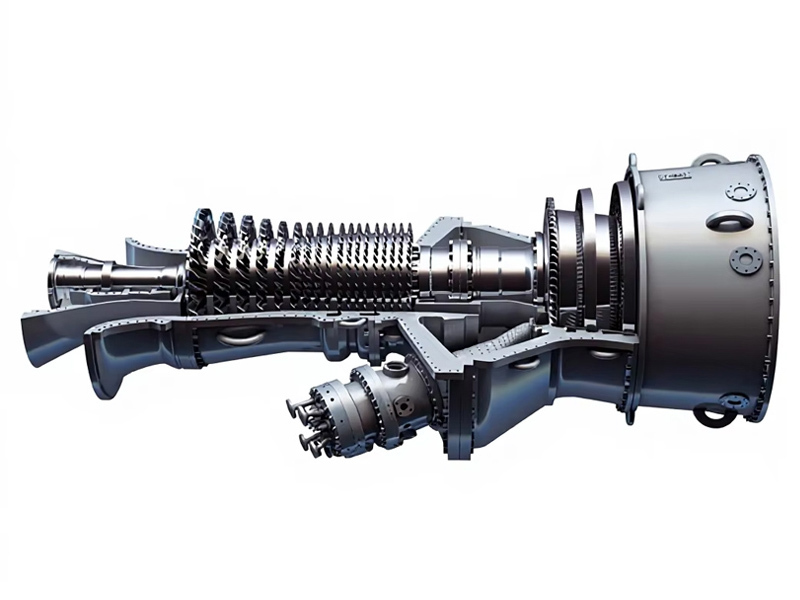
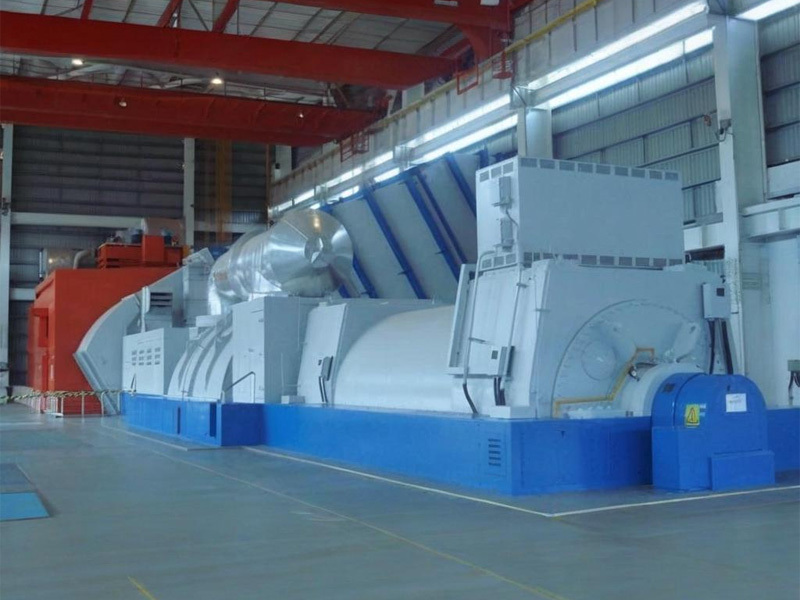
The combined cycle steam。 turbine is a multi-pressure, reheat, condensing turbine designed for gas-steam combined cycle applications.
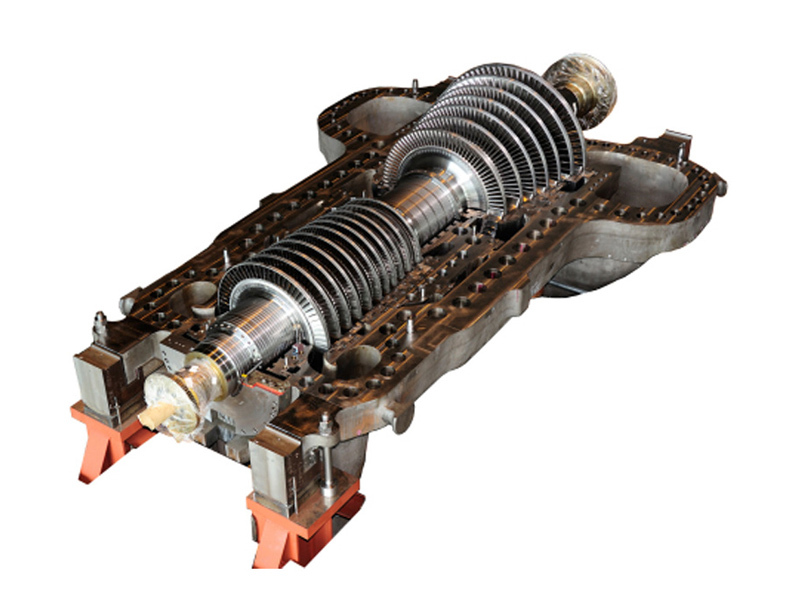
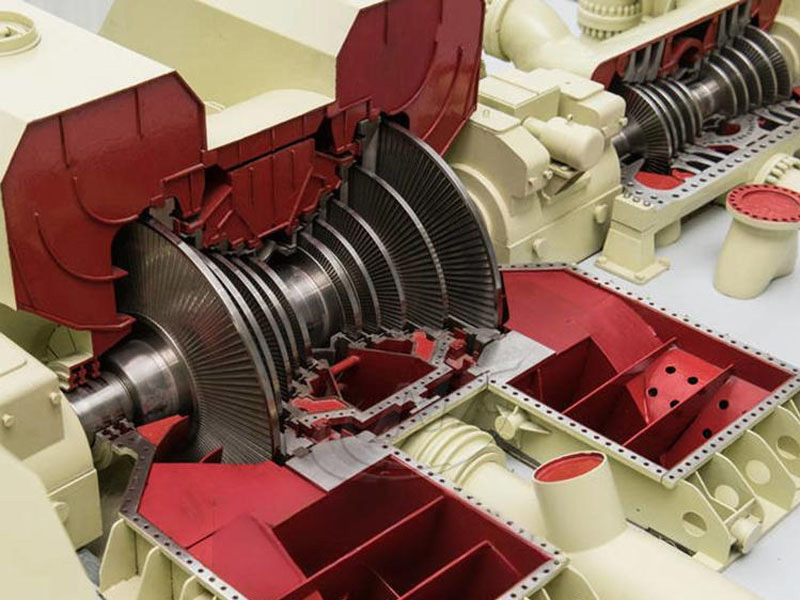
Featuring a two-cylinder double-exhaust configuration, it incorporates an impulse-type combined high/intermediate-pressure cylinder and a symmetrical reverse-flow reaction-type low-pressure cylinder. Driven by steam generated from recovering waste heat in the gas turbine exhaust, it achieves an electrical efficiency of up to 60%.
- Luoyang Hanfei Power Technology Co., Ltd
- Henan, China
- Possesses complete, stable, and efficient supply capabilities for steam turbines and their components.
- Information
- Download
Combined Cycle Steam Turbine
A combined cycle steam turbine is a high-efficiency power generation equipment typically operated in conjunction with a gas turbine. It is driven by steam generated from recovering waste heat in the gas turbine exhaust. This turbine belongs to the category of multi-pressure, reheat, condensing steam turbines. Its structural design includes a combined high/intermediate-pressure cylinder (impulse design) and a low-pressure cylinder (symmetrical reverse-flow reaction design) to enhance efficiency, achieving a power generation efficiency of approximately 60%.
The combined cycle configuration utilizing both reaction and impulse-type steam turbines exhibits the following characteristics:
1.High-Efficiency Energy Utilization: High-temperature exhaust gas from the gas turbine drives the steam turbine, enabling a combined cycle efficiency exceeding 60%.
2.Structural Complementarity: Impulse turbines are suitable for power generation and speed regulation, while reaction turbines adapt well to variable operating conditions for driving loads. Their combined design optimizes overall performance.
3.Manufacturing and Assembly Technology: Key technologies involved include dissimilar metal welding, alignment of flow path components, and modular shipment, ensuring precision in dynamic/static clearances and shaft alignment.
4.Application Adaptability: Combined cycle systems are widely used in large-scale power plants, balancing stable power supply with variable load demands.
In a combined steam turbine, some stages employ the impulse principle (where steam expands primarily in the stationary blades, with moving blades mainly redirecting flow), while other stages use the reaction principle (where steam expands in both stationary and moving blades). This design aims to optimize efficiency—impulse stages are suited for high-pressure sections, and reaction stages for low-pressure sections—by rationally distributing the expansion process to reduce losses.
The high-pressure cylinder is an impulse turbine, and the low-pressure cylinder is a double-flow reaction turbine. This configuration fully leverages the advantages of both impulse and reaction stages, enhancing turbine performance.
The impulse-reaction hybrid steam turbine is a two-cylinder main turbine structure widely adopted in marine applications.
The high-pressure steam turbine utilizes impulse stages because:
1.When blades are too short, partial admission can be employed to increase blade height.
2.The relative value of the working blade radial clearance is larger, helping reduce internal leakage losses and improve stage efficiency.
The low-pressure steam turbine uses reaction stages because:
1.With long blades and significant reaction forces, it prevents adverse reactions at the blade root
2.The relative value of radial clearance is smaller, reducing internal leakage losses.
3.The lower steam velocity in reaction stages decreases erosion of moving blades by water droplets in wet steam.
Furthermore, impulse stages serve as control stages or, for efficiency gains, can be designed with a small degree of reaction, which may also be termed an impulse-reaction hybrid turbine.
The core function of a combined steam turbine is to enhance overall performance. Specific aspects include:
1.Improving Thermal Efficiency: By mixing stage types, the steam expansion process more closely approximates the ideal cycle, reducing exhaust loss.
2.Enhancing Operational Flexibility: Adapting to different load demands, such as handling large pressure drops in the high-pressure section and ensuring smooth transition in the low-pressure section.
3.Optimizing Blade Design: Impulse stage blades are thicker, suitable for high-pressure/high-temperature environments; reaction stage blades are more streamlined, reducing flow losses.
In practical applications, combined steam turbines are widely used for power generation and industrial drives. For example, in thermal power plants, they efficiently drive generators for electricity production. In industries such as chemical or petroleum refining, they can directly drive compressors or pumps, enabling cascaded energy utilization.