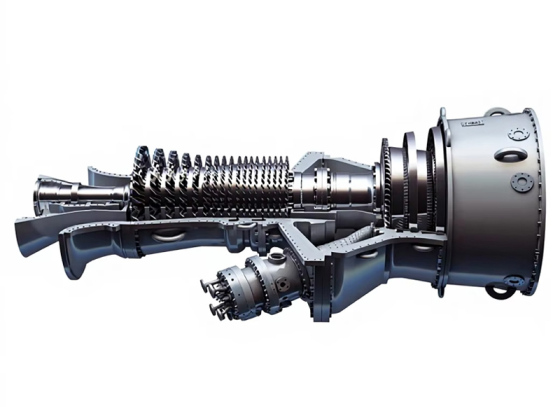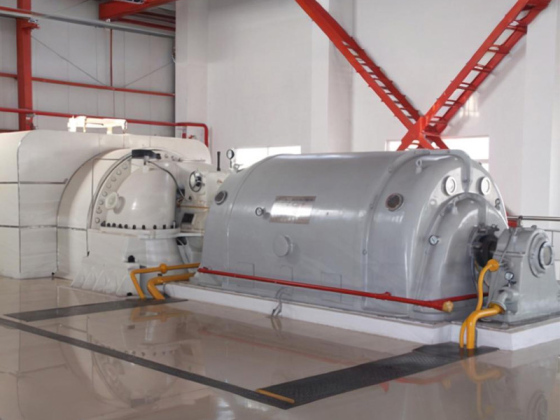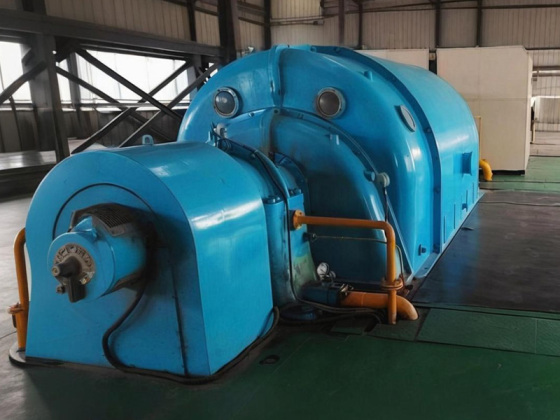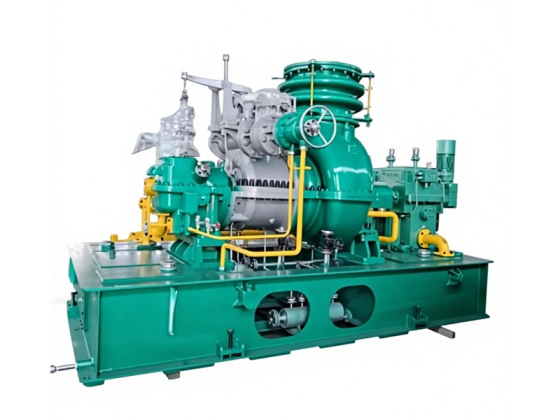



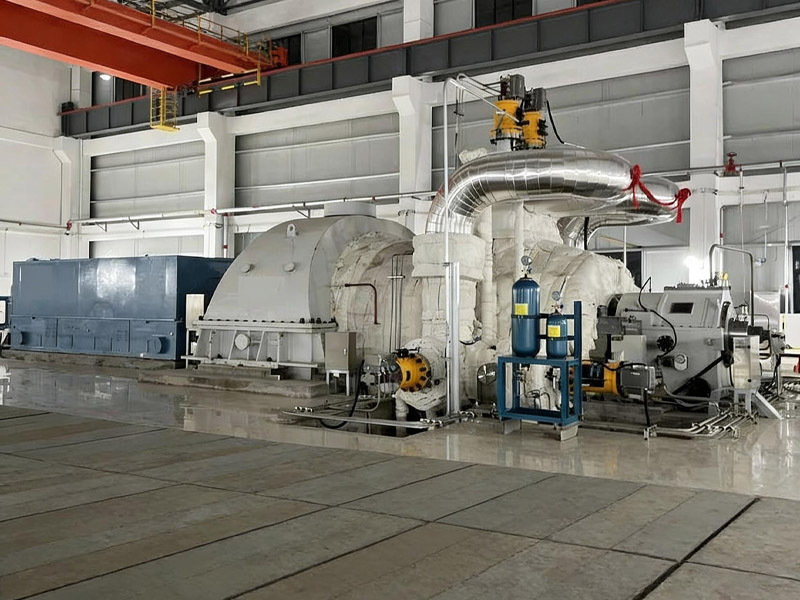
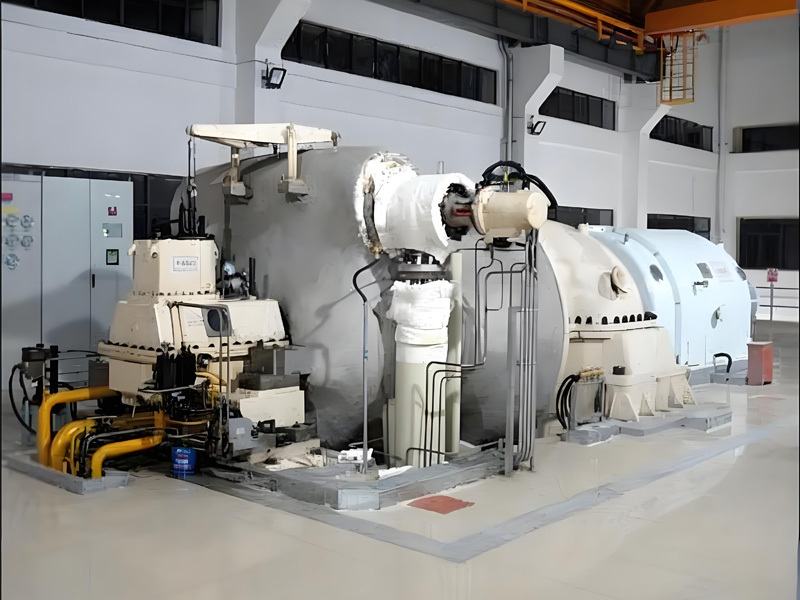
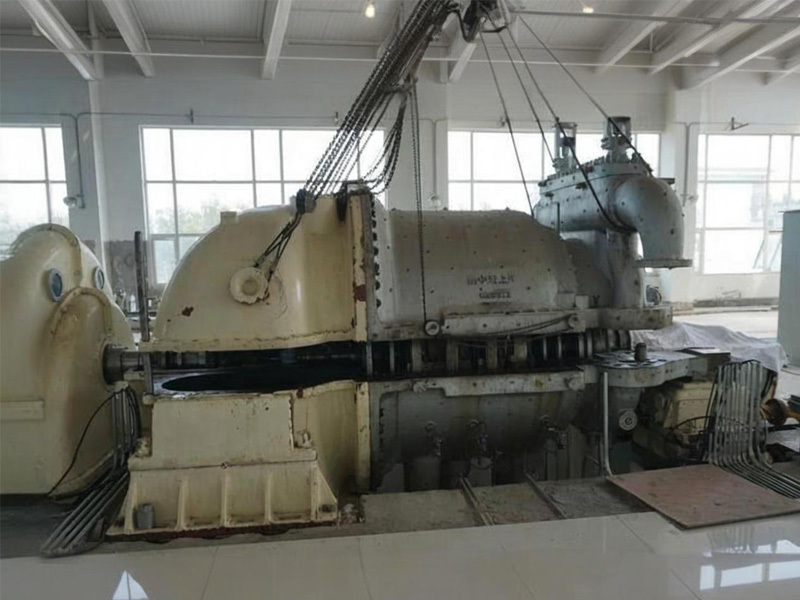
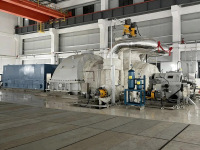
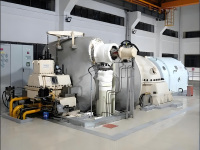
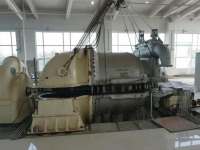
Intermediate Reheat Turbine
Intermediate Reheat Steam Turbine
An intermediate reheat steam turbine operates by extracting steam partway through the expansion process. This steam is then directed back to the boiler's reheater, where its temperature is raised (typically back to the unit's rated temperature). The reheated steam returns to the turbine to perform additional work before finally exhausting into the condenser.
The intermediate reheating of steam not only reduces the moisture content in the turbine's exhaust but also improves the working conditions for the final-stage blades, thereby enhancing the turbine's relative internal efficiency.
Compared to condensing turbines and controlled extraction turbines, the sole structural distinction of an intermediate reheat turbine lies in its intermediate reheat system, which is a substantial and complex addition. Furthermore, the power generated by the reheated steam passing through the intermediate and low-pressure cylinders accounts for approximately two-thirds of the turbine's total output. Consequently, this configuration can lead to severe overspeed during a load rejection event. This underscores the necessity for a thorough understanding of the working principles governing the hydraulic control system of intermediate reheat steam turbines.
- Luoyang Hanfei Power Technology Co., Ltd
- Henan, China
- Possesses complete, stable, and efficient supply capabilities for steam turbines and their components.
- Information
- Download
Intermediate Reheat Steam Turbine
The intermediate reheat steam turbine is a power generation unit that employs steam reheat technology to enhance thermal efficiency, primarily utilized in large-scale thermal power plants and combined heat and power (CHP) systems. The equipment operates by returning partially expanded steam from the high-pressure cylinder to the boiler's reheater for secondary heating. After its temperature is restored close to the initial parameters, the steam is directed into the intermediate-pressure and low-pressure cylinders to continue performing work, ultimately exhausting into the condenser to complete the energy conversion cycle.
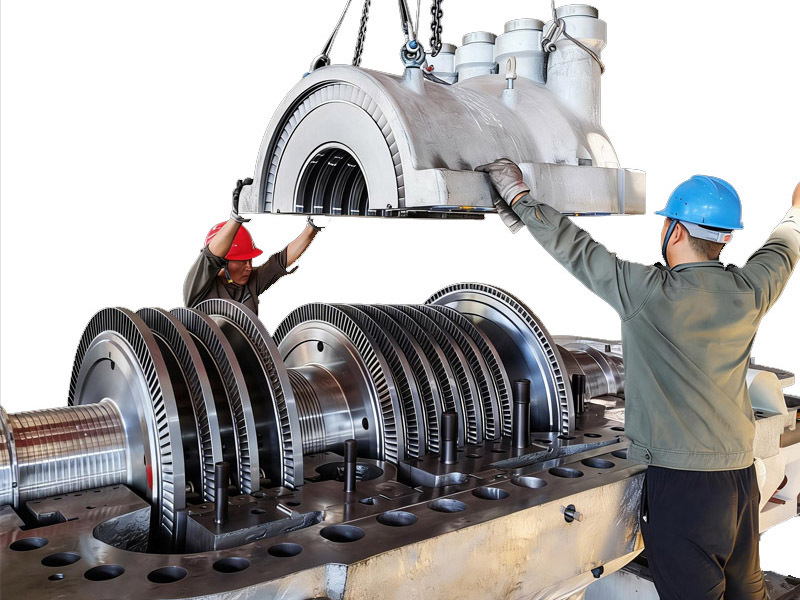
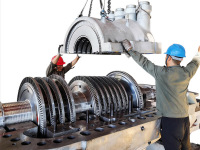
This turbine unit adopts a multi-cylinder structural design comprising high-pressure, intermediate-pressure, and low-pressure cylinders. The final-stage blades can reach lengths of up to 1.5 meters to accommodate the low-pressure, high-volume flow operating conditions. The reheat cycle helps control steam moisture content within an acceptable range, which improves the turbine's relative internal efficiency and enhances the working conditions of the final-stage blades. The system, together with the boiler and condenser, forms a Rankine cycle, achieving an overall efficiency exceeding 45%.
Working Principle of Intermediate Reheat Steam Turbines: Steam entering the turbine expands to a certain pressure, after which it is entirely extracted and sent to the boiler's reheater for heating. It is then returned to the turbine to continue its expansion and perform work. Compared to condensing turbines and controlled extraction turbines, the sole structural difference of an intermediate reheat turbine lies in its intermediate reheat system, which is substantial in scale. Furthermore, the power generated by the reheated steam passing through the intermediate and low-pressure cylinders accounts for approximately two-thirds of the total unit output. Consequently, during a load rejection event, the turbine is prone to severe overspeed due to this characteristic.
The intermediate reheat steam turbine optimizes the energy conversion process significantly by incorporating a reheater between the high-pressure cylinder and the intermediate/low-pressure cylinders. Steam partially expanded in the high-pressure cylinder is redirected to the boiler for reheating to a temperature near its initial value before being admitted to subsequent cylinders for further work.
Core characteristics include:
1.Enhanced Thermal Efficiency and Economic Performance: The reheat process increases the steam's work capability, reduces cold source losses, raises cycle efficiency to over 45%, and lowers the levelized cost of electricity over long-term operation.
2.Reduced Moisture Content and Erosion Risk in Final-Stage Blades: Reheating improves steam dryness, effectively controlling exhaust moisture content, mitigating erosion on final-stage blades, and extending equipment service life.
3.Structural Complexity and Multi-Cylinder Design: Requires configuration of high-pressure, intermediate-pressure, and low-pressure cylinders along with interconnecting piping, resulting in high system integration. Suitable for large-capacity units (e.g., above 200 MW).
4.Regulation Characteristics and Control Challenges: Steam stored in reheat piping during load rejection can cause rapid speed increase, necessitating intermediate-pressure cylinder main stop valves/control valves, bypass systems, and dynamic over-opening control strategies to ensure stability.
5.Application Scenarios and Capacity Scaling: Primarily used in high-parameter, large thermal power plants and CHP systems. Designs may incorporate single or double reheat stages to suit different pressure levels (e.g., initial steam pressure exceeding 12 MPa), pushing the upper limit of single-unit capacity.
By introducing a reheat cycle into the steam expansion process, the intermediate reheat steam turbine significantly improves thermodynamic cycle efficiency and enhances operational characteristics. Its core functions include increasing thermal efficiency, controlling steam moisture, boosting power output, and optimizing final-stage blade working conditions.
1. Improving Thermal Efficiency: This technology involves returning steam after work extraction in the high-pressure cylinder to the boiler reheater for secondary heating to near-initial temperature, then admitting it to the intermediate and low-pressure cylinders for continued expansion. This effectively increases the enthalpy drop in the low-pressure cylinder, reduces cold source losses, and elevates the overall cycle thermal efficiency to over 45%, making it particularly suitable for large-capacity thermal power units.
2. Controlling Steam Moisture: As steam pressure increases, simple isentropic expansion leads to higher exhaust moisture, causing water droplet erosion damage. Intermediate reheat significantly reduces the final moisture content after expansion by restoring superheat through secondary heating, thereby mitigating erosion on final-stage blades and extending equipment life.
3. Enhancing Power Output and Adaptability: The reheat cycle allows steam to release more energy in the intermediate and low-pressure cylinders, improving the unit's relative internal efficiency and total power output. Simultaneously, the system optimizes load response via intermediate-pressure control valves and bypass systems, prevents overspeed during load rejection, and resolves steam supply-demand mismatches between the turbine and boiler at low loads.
4. Optimizing Final-Stage Blade Working Conditions: By controlling moisture content, the expansion process in the low-pressure cylinder becomes smoother, reducing droplet impact and improving the operating environment for final-stage blades (which can reach 1.5 meters in length), thereby enhancing operational reliability.