

- Home
- >
- Products
- >
- Condensing Turbine
- >
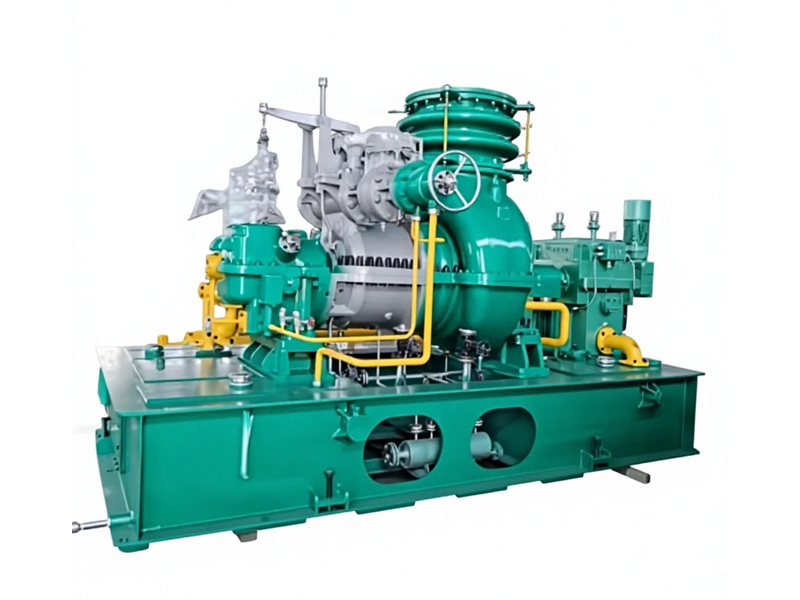
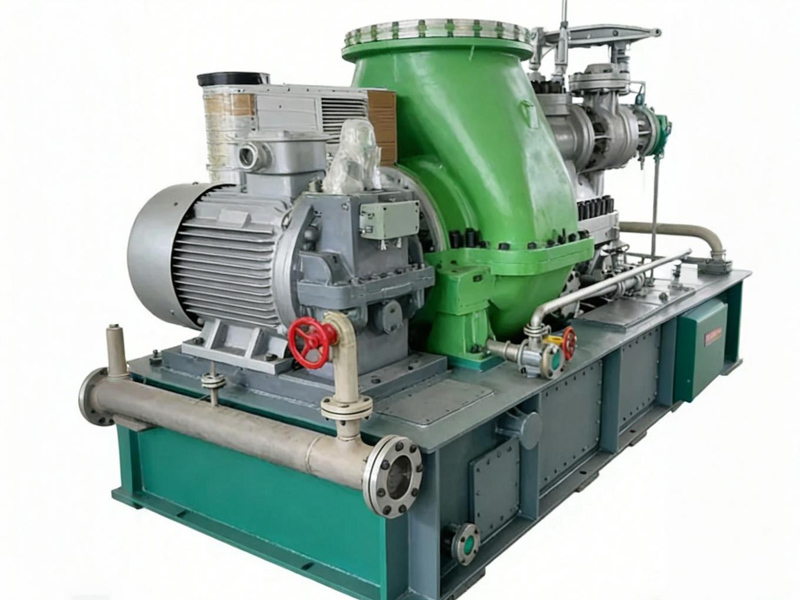
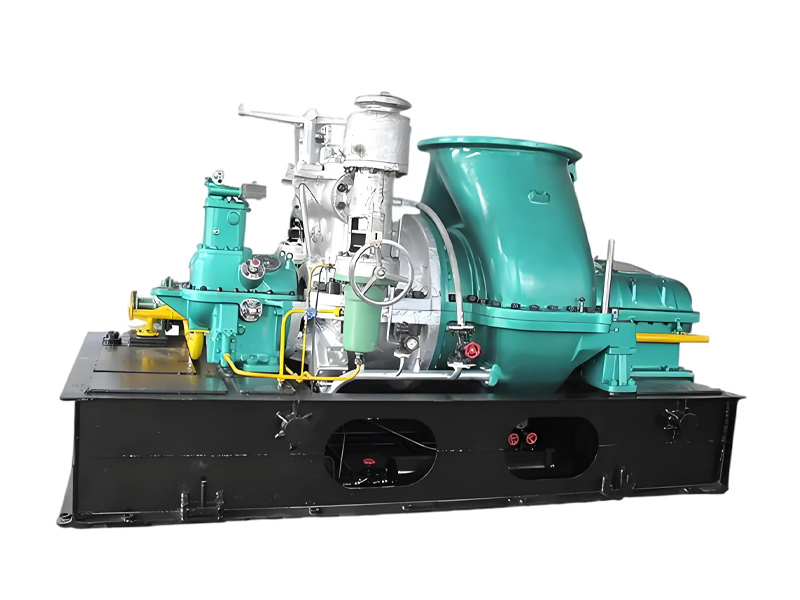
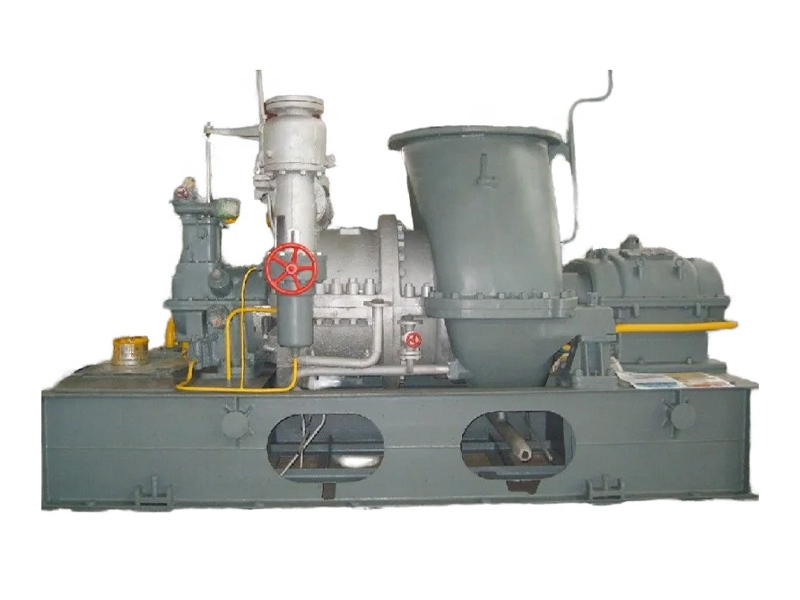
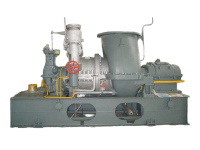
Condensing Turbine
Condensing Steam Turbine
A condensing steam turbine is specifically designed for power generation, wherein after expansion and work extraction, the vast majority of the steam is directed into a condenser to be condensed back into water, thereby completing the thermodynamic cycle.
Working Principle and Core Components: Its core principle lies in discharging the steam into a condenser after work extraction. Under a vacuum environment, the steam condenses into water, causing a drastic reduction in volume and the creation of a negative pressure. This increases the ideal enthalpy drop of the steam, enhancing thermal efficiency.
The main components include the steam turbine proper, condenser, condensate pump, and circulating water pump. The condenser typically employs a surface-type structure, utilizing cooling water (either recirculated or once-through) to achieve condensation. An air ejector is responsible for maintaining the vacuum by promptly removing non-condensable gases, ensuring efficient heat transfer.
- Luoyang Hanfei Power Technology Co., Ltd
- Henan, China
- Possesses complete, stable, and efficient supply capabilities for steam turbines and their components.
- Information
- Download
Condensing Steam Turbine
A condensing steam turbine is a type of turbine in which steam, after expansion and performing work inside the turbine, is entirely directed into a condenser (except for minor shaft seal leakage) to be condensed into water.
Primarily consisting of the turbine proper, condensate pump, condenser, and circulating water pump, a condensing steam turbine operates by having the exhaust steam from the turbine enter the condenser, where it is cooled and condensed from a gaseous state into water. The condensate is then returned to the boiler by the condensate pump. The condenser plays a crucial role in this process. Its primary purpose is to enhance the thermal efficiency of the turbine. This is achieved by exploiting the phenomenon where steam, upon being re-cooled into water, undergoes a drastic reduction in volume. The remaining space consequently forms a vacuum, which increases the ideal enthalpy drop of the steam.
In practice, to further improve thermal efficiency and reduce the diameter of the turbine's exhaust hood, partially expanded steam is extracted from intermediate stages of the turbine and directed to feedwater heaters to preheat the boiler feedwater. This type, known as a non-adjustable extraction condensing turbine, is also categorized under condensing turbines. They are the standard type of turbine specialized for power generation in thermal power plants. The condensing system mainly comprises the condenser, circulating water pump, condensate pump, and air ejector. The turbine exhaust steam enters the condenser, is cooled and condensed into water by the circulating cooling water, and is then extracted by the condensate pump. After being heated in various stages of feedwater heaters, it is supplied to the boiler as feedwater.
During the process where the exhaust steam is cooled and condensed into water within the condenser, its volume shrinks abruptly. This creates a vacuum in the originally steam-filled enclosed space, which lowers the exhaust pressure of the turbine. Consequently, the ideal enthalpy drop of the steam is increased, thereby improving the thermal efficiency of the plant. Non-condensable gases (primarily air) present in the turbine exhaust are removed by the air ejector to maintain the necessary vacuum.
The condensing steam turbine is a key piece of equipment widely used in thermal and nuclear power generation. Its core functions are to drive the electrical generator via steam expansion and to optimize energy conversion efficiency.
1. Establish and Maintain a Vacuum Environment to Enhance Efficiency: Exhaust steam, after performing work, is discharged into the condenser where it is condensed into water by circulating cooling water. The drastic volume reduction creates a vacuum, significantly lowering the exhaust pressure and increasing the ideal enthalpy drop of the steam, thereby improving thermal efficiency.
2. Facilitate Working Fluid Circulation and Energy Recovery: The condensate is returned to the boiler for reheating via the condensate pump, forming a closed cycle. This recycles and conserves water while reducing energy consumption. Simultaneously, the waste heat from the steam is rejected to the environment through the thermodynamic cycle, ensuring stable system operation.
3. Integrate Key Auxiliary Functions: The air ejector continuously removes non-condensable gases, maintaining high vacuum efficiency in the condenser. The condensation process also enables deaeration of the condensate (vacuum deaeration), reducing equipment corrosion and enhancing water quality safety.
4. Adapt to High-Power and Flexible Demand: By optimizing the design of the last-stage blades and employing a multi-flow exhaust configuration, it can support high power output (e.g., single-unit capacity reaching hundreds of megawatts). Extraction condensing turbine variants can also supply extraction steam from intermediate stages for heating purposes, meeting both power generation and district heating needs, thereby improving overall thermal efficiency (which can reach 50%-70%).