

- Home
- >
- Products
- >
- Lime Rotary Kiln
- >
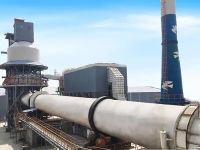
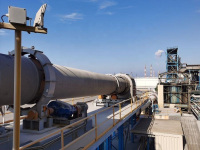
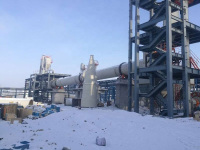
Lime Rotary Kiln
Lime Rotary Kiln
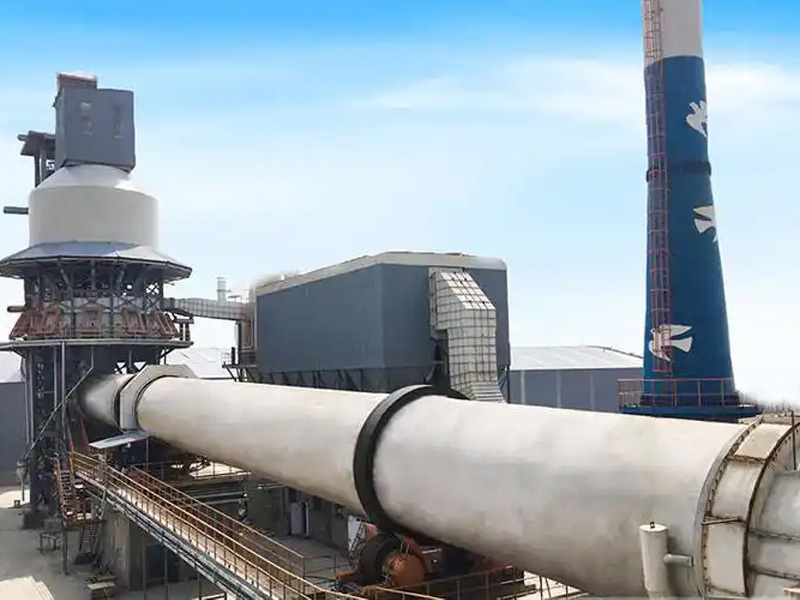
A lime rotary kiln is a key industrial equipment specifically designed for calcining limestone to produce lime. Its core principle involves the continuous heating of limestone within a rotating cylinder under high-temperature conditions, causing it to undergo a decomposition reaction to form calcium oxide (i.e., lime) and carbon dioxide.
This equipment is widely used in industries such as building materials, chemicals, and metallurgy, supplying essential raw materials for construction materials, chemical products, and steel smelting. It offers advantages such as high thermal efficiency, stable operation, and a high activity level of the product. Available in various specifications and models, it can meet the production needs of large, medium, and small enterprises, serving as a pivotal link between limestone raw materials and downstream industries.
- Luoyang Hanfei Power Technology Co., Ltd
- Henan, China
- Possesses complete, stable, and efficient supply capabilities for Rotary Kiln and their components.
- Information
Lime Rotary Kiln (also known as Drum Rotary Kiln)
The lime rotary kiln is a core industrial equipment specifically designed for calcining limestone to produce active lime (primarily composed of calcium oxide). It facilitates the decomposition reaction of limestone into calcium oxide and carbon dioxide under high-temperature conditions, with its function spanning the entire process of raw material processing, thermal energy utilization, and product quality control. With its advanced structural design, efficient heat exchange capability, and stable operational performance, this equipment is widely employed in heavy industry sectors such as building materials, chemical engineering, and metallurgy. It serves as a critical link connecting limestone raw materials with the needs of downstream industries.
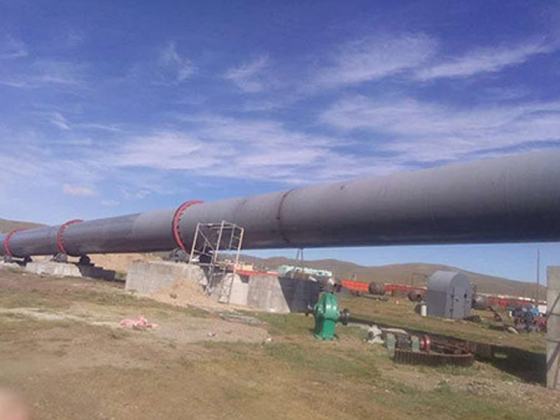
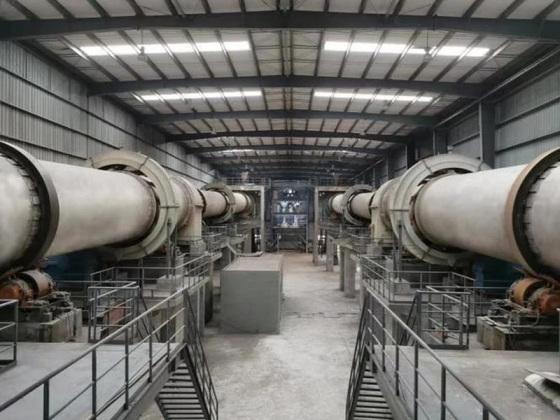
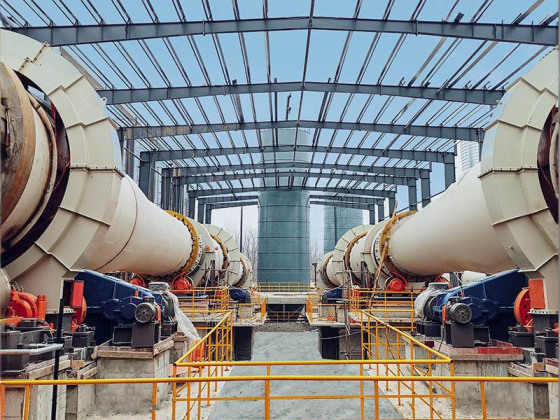
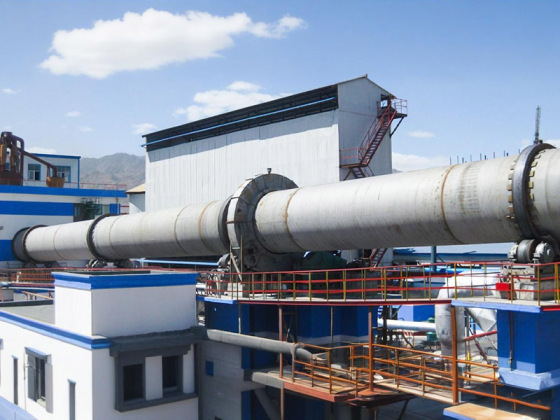
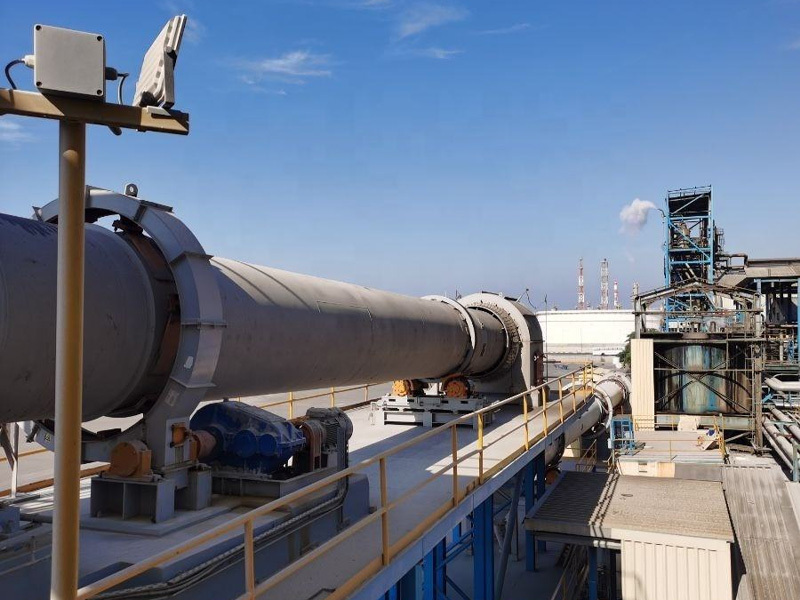
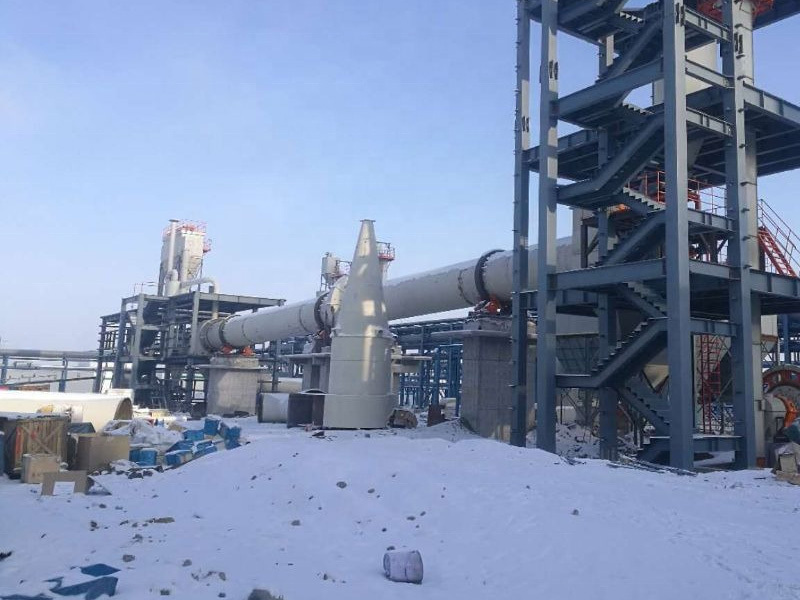
In terms of its core structure, the lime rotary kiln combines stability with specialization. It mainly consists of key components including the kiln body, drive system, supporting device, combustion device, and sealing device. The kiln body is made of high-temperature and corrosion-resistant steel, lined internally with composite refractory materials. This lining protects the kiln body from high-temperature erosion while reducing radiant heat loss. The kiln body is designed with an inclination of 3.5%-4%, and its length-to-diameter ratio is typically maintained between 11 and 16, allowing it to adapt to kiln body deflection of up to ±150 mm. The drive system is equipped with a stepless speed control motor, coupled with auxiliary drives and backup power supplies, ensuring the kiln body rotates slowly and steadily. The supporting device precisely bears the weight of the kiln body, guaranteeing smooth operation.
A core highlight is the sealing structure. The kiln head and kiln tail employ a combined scale seal composed of metal fish scales and flexible materials, achieving an air leakage coefficient of less than 10%, effectively maintaining a stable high-temperature environment inside the kiln. It is also paired with a low-pressure drop vertical preheater and a packed vertical cooler, forming a complete heat exchange system.
Its working principle centers on "continuous rotary drive + zoned heat exchange," divided throughout into three stages: preheating, calcination, and cooling. Limestone raw material first enters the vertical preheater, where efficient preheating results in a decomposition rate of 20%-25% before entering the kiln. It can directly utilize fine-grained raw materials of 10-15 mm, improving resource utilization. The preheated material enters the kiln body from the kiln tail (high end). Utilizing the kiln's inclination and slow rotation, it both tumbles uniformly in the circumferential direction and moves axially at a constant speed toward the kiln head (low end). The combustion device at the kiln head provides heat based on the fuel type (coal, natural gas, heavy oil, etc.), stabilizing the calcination temperature inside the kiln between 1250-1350°C, where the limestone undergoes its core decomposition reaction. The calcined lime then enters the vertical cooler. The cooler allows for zoned ventilation, cooling the discharged lime to ambient temperature +80°C, facilitating subsequent transportation and storage. Simultaneously, it can preheat the secondary air entering the kiln to above 700°C, enabling waste heat recovery and reuse, thereby reducing fuel consumption. Exhaust gases such as carbon dioxide produced by combustion are treated before emission. The entire process enables continuous and highly efficient operation.
The core technical advantages of the lime rotary kiln are concentrated in three dimensions: thermal efficiency, sealing performance, and stability.
1.High Thermal Efficiency: Relying on the synergistic effect of the low-pressure drop vertical preheater and vertical cooler, the waste heat recovery and utilization rate is significantly improved. This not only shortens the kiln length (the length-to-diameter ratio can be reduced to 14-15) and reduces heat dissipation but also lowers the energy consumption per unit of product.
2.Excellent Sealing Performance: The combined scale sealing structure effectively controls the air leakage rate. Coupled with the composite refractory lining, it further reduces heat loss, ensuring a stable thermal environment inside the kiln.
3.Stable and Reliable Operation: The stepless speed control drive system allows precise adjustment of the kiln's rotation speed to suit different production needs. The configuration of auxiliary drives and backup power supplies prevents production interruptions caused by sudden failures. Additionally, the equipment has few vulnerable parts and a high operational rate.
Moreover, by precisely controlling the calcination temperature and material residence time, phenomena such as over-burning or under-burning can be effectively avoided, producing high-activity lime that meets the stringent raw material quality requirements of downstream industries.
In terms of application scenarios, the lime rotary kiln exhibits strong adaptability and is integral to several core industrial sectors.
• In the building materials industry, it is used to produce construction lime, providing fundamental raw materials for concrete, mortar, and other building materials.
• In the chemical industry, it serves as a key raw material supplier for the production of chemical products like calcium carbide, soda ash, and bleaching powder.
• The metallurgical industry is one of its core application fields. The produced active lime is used as a fluxing agent in steelmaking processes for desulfurization and dephosphorization, directly enhancing steel quality.
The market offers lime rotary kilns in various specifications and models. Large-scale equipment boasts the advantages of high production capacity and stable performance, suitable for large-scale production enterprises. Small-scale equipment, characterized by lower investment and quick returns, meets the needs of small and medium-sized enterprises. Companies can select the appropriate model based on their own production capacity requirements and actual operating conditions.