

- Home
- >
- Products
- >
- Impulse Turbine
- >
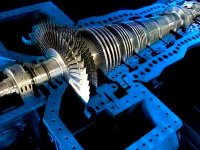
Impulse Turbine
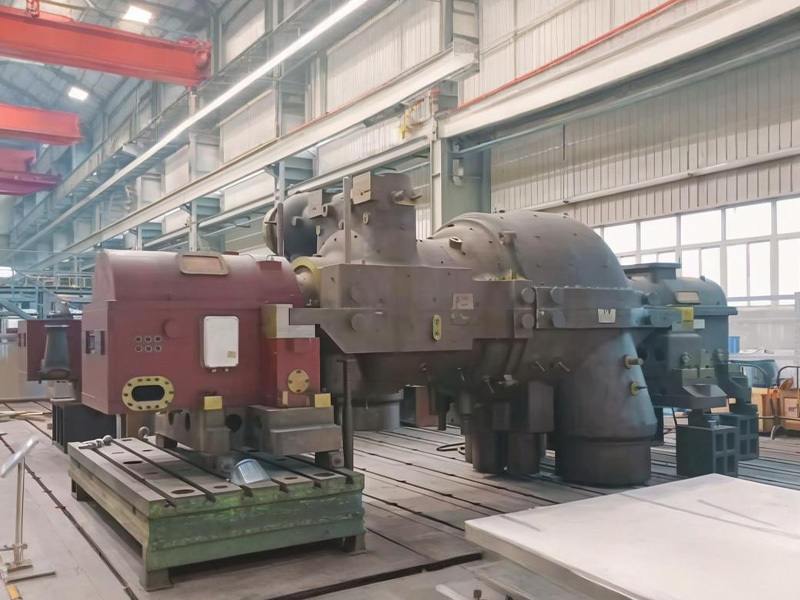
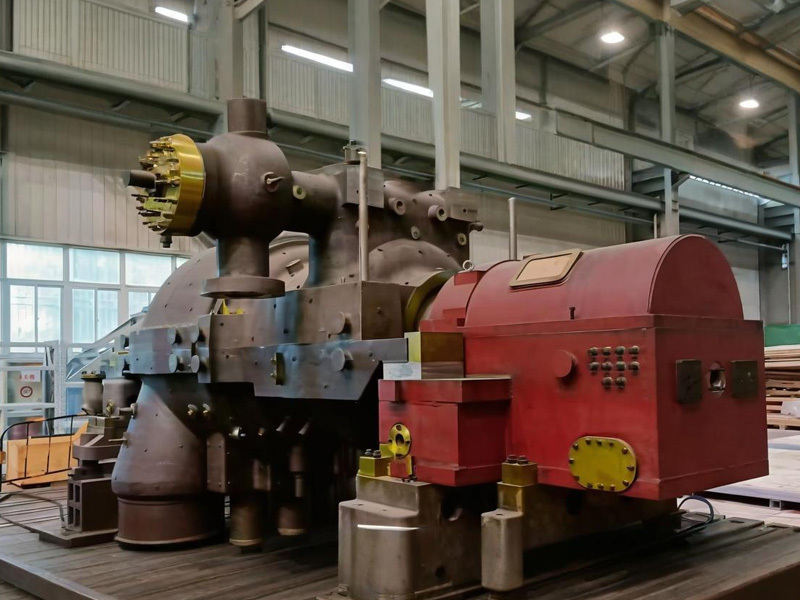
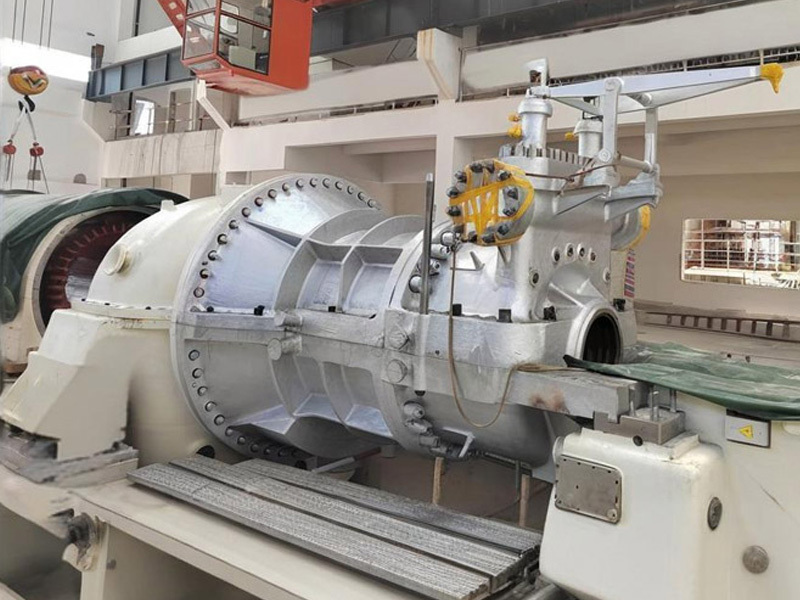
Impulse Steam Turbine
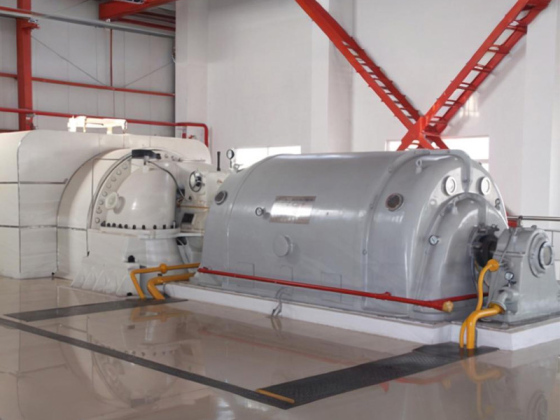
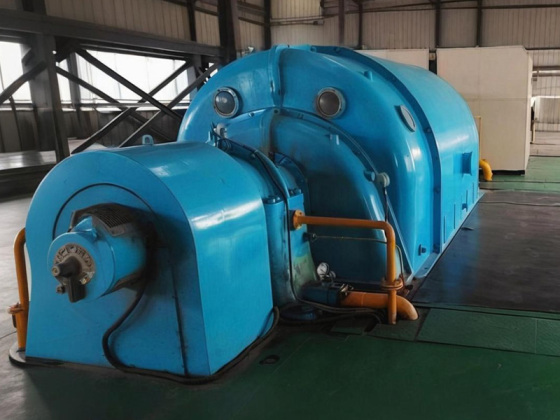
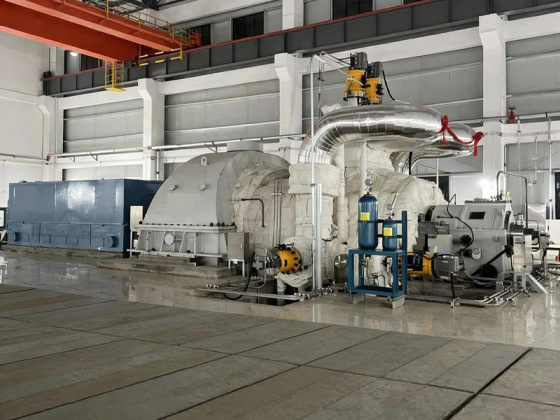
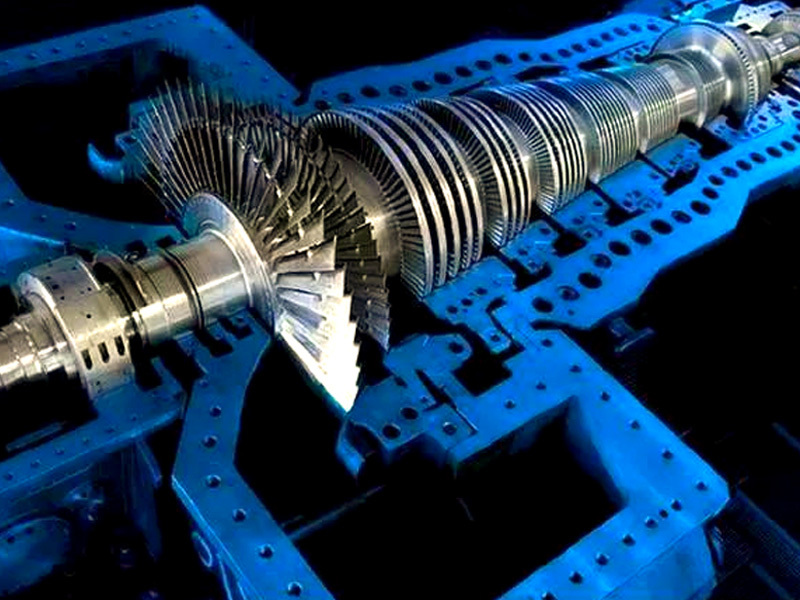
An impulse steam turbine is an efficient and environmentally friendly energy conversion device. Its working principle involves using high-pressure steam expansion to drive the turbine's rotation, thereby converting thermal energy into mechanical energy. In this type of turbine, the expansion and acceleration of steam primarily occur in the stationary nozzles rather than on the moving blades. Structurally, this turbine mainly consists of a high-pressure steam generator, a turbine rotor, and a condenser.
During the operation of an impulse steam turbine, high-pressure steam is generated in the steam generator and then directed through a series of pipes to the turbine, where it drives the turbine's rotation. The rotational motion of the turbine is converted into the required mechanical power through mechanical transmission devices such as couplings. The exhaust steam from the turbine is cooled and condensed in the condenser before being returned to the steam generator for reuse.
- Luoyang Hanfei Power Technology Co., Ltd
- Henan, China
- Possesses complete, stable, and efficient supply capabilities for steam turbines and their components.
- Information
- Download
Impulse Steam Turbine
An impulse steam turbine, also known as an impulse-type turbine, is a type of thermal machinery that relies on high-velocity steam jets impacting blades to drive the rotor's rotation. Its core value lies in efficiently converting thermal energy into mechanical energy, making it a key power equipment in modern thermal power generation, nuclear power generation, ship propulsion, and other fields. Its application scenarios cover energy supply and power drive requirements across multiple industries.
Core Working Principle
The working principle of an impulse steam turbine is based on Newton's law of impulse. The energy conversion process is concentrated and efficient, with the core workflow divided into two steps: First, steam enters and expands within fixed nozzles, accelerating and converting its thermal energy into high-velocity kinetic energy, forming a steam jet with sufficient impact force. Subsequently, this high-velocity steam jet impacts the moving blades mounted on the rotor at a specific angle, transferring kinetic energy to the blades, thereby driving the turbine wheel and main shaft to rotate and output mechanical work externally.
Its distinguishing feature is that the steam expansion process and the majority of the pressure drop occur primarily within the nozzles. The steam pressure within the moving blade passages remains essentially constant. The moving blades act as passive force-receiving components, receiving the impact of the steam jet to facilitate the transfer from kinetic energy to mechanical energy.
Core Characteristics
1. Concentrated Expansion Process: The majority of the steam pressure drop and expansion work occur within the nozzles. The moving blades primarily function to transfer kinetic energy and do not participate in the main steam expansion process.
2. Power Derived from Impulse Force: The core driving force for rotor rotation comes from the instantaneous impact of the high-velocity steam jet on the moving blades. The energy transfer method is analogous to the instantaneous force transfer in "kicking a football." The impact efficiency directly affects the overall unit performance.
3. Simple Structural Design: Moving blades often employ bucket-shaped or flat-plate designs, featuring regular shapes that are easy to manufacture. The overall structure is relatively simple, does not require complex casings, and significantly improves subsequent maintenance convenience.
4. Adaptability to High-Speed Operation: Single-stage efficiency is relatively high, and leaving loss is comparatively small. This makes it very suitable for multi-stage series designs. The total unit efficiency can be effectively enhanced through multi-stage energy superposition, adapting to high-speed operational requirements.
Structural and Performance Features
(I) Core Structural Components
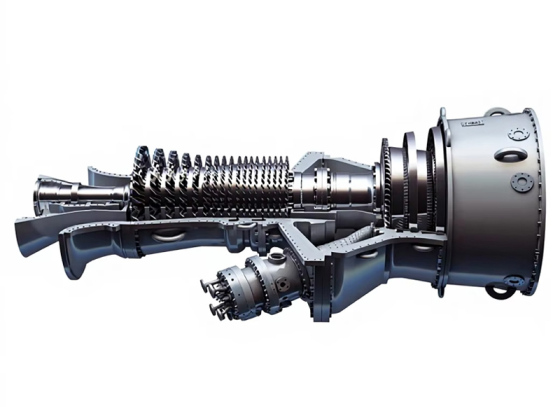
The unit mainly consists of key components such as nozzles, diaphragms, moving blades, turbine wheels, and the cylinder: Nozzles are responsible for steam acceleration and energy conversion; diaphragms fix the nozzles and separate the flow areas of each stage; moving blades and turbine wheels work together to receive kinetic energy and output rotation; the cylinder provides an enclosed operating environment for the entire flow system. Among these, moving blades are often designed as symmetrical buckets or cup-shaped to efficiently capture and deflect the steam flow, ensuring energy transfer efficie
(II) Core Performance Advantages
Compared to reaction steam turbines, impulse steam turbines possess distinct performance characteristics and advantages:
• Firstly, they have fewer stages and a simplified structure, resulting in lower manufacturing costs, simpler daily maintenance procedures, and controllable operational costs.
• Secondly, they offer excellent energy conversion efficiency. Utilizing high-pressure steam technology, thermal efficiency can exceed 40%.
• Thirdly, they feature low exhaust gas temperatures and reduced pollutant emissions, highlighting their environmental performance and aligning with low-carbon operational needs.
• Fourthly, the structure is mature and reliable, with a long service life, low failure rates, and the ability to adapt to long-term continuous operation, ensuring strong stability.
Application Scenarios
Leveraging advantages such as mature design, stable performance, and wide adaptability, impulse steam turbines are widely used in various industrial fields including power generation, chemicals, papermaking, textiles, and steel. Their core application scenarios can be categorized into three types:
1. Power Generation Field: Serving as the core power equipment for generator sets in large-scale thermal power plants and nuclear power stations, providing stable electrical power output to the grid. They are a key energy conversion unit within power systems.
2. Chemical Industry Field: Used to drive critical equipment such as compressed air devices and various types of pumps, providing stable power support for chemical production processes. They adapt to the high-temperature, high-pressure requirements of process conditions.
3. Other Industrial Fields: In industries such as papermaking, textiles, and steel, they are used to drive various production machinery, replacing traditional power units to enhance production efficiency and energy utilization efficiency.
In summary, the impulse steam turbine, with its core advantages of high efficiency, environmental friendliness, reliability, and structural simplicity, achieves efficient conversion from thermal to mechanical energy through a precise energy conversion mechanism. It holds an important position in multi-industry power supply and energy conversion systems, representing a key thermal equipment that combines economic viability with practicality.