

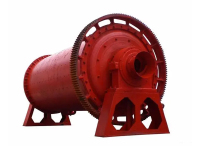
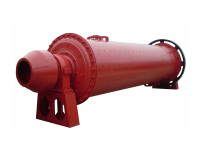
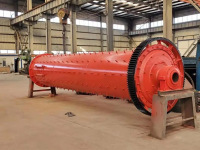
High-Fineness Grinding Mill
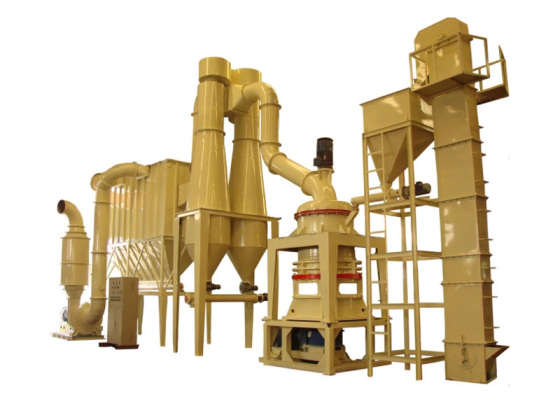
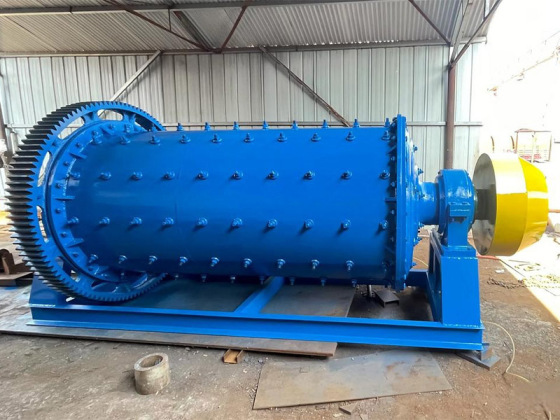
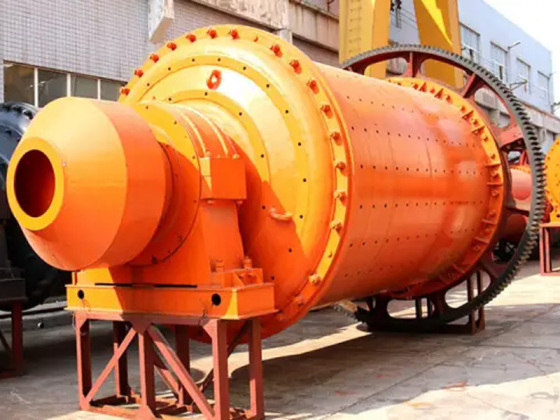
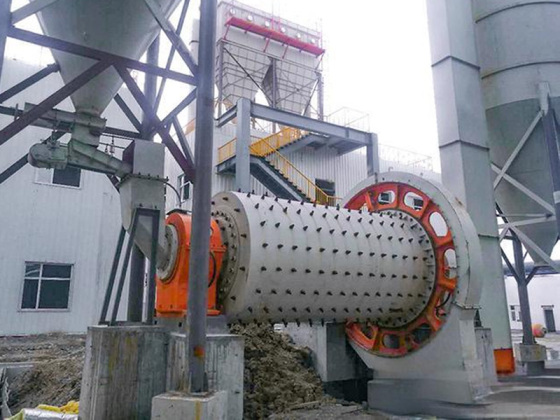
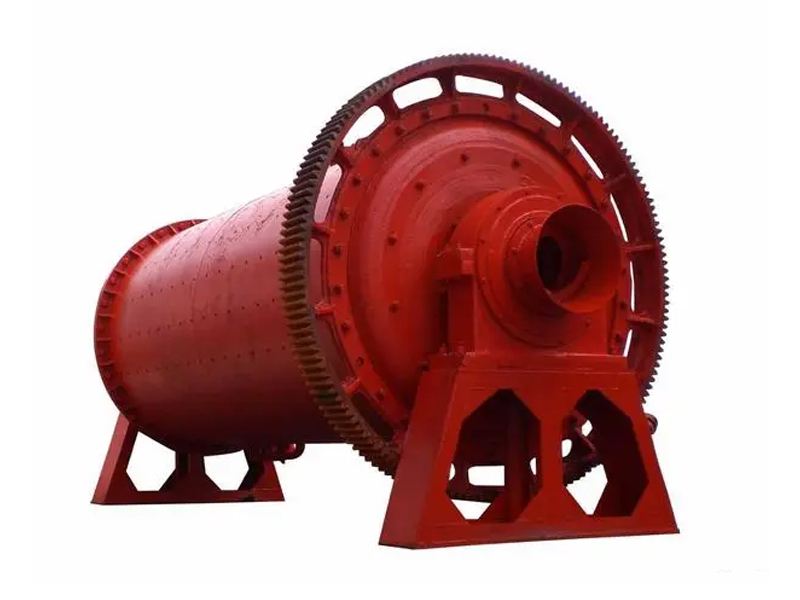
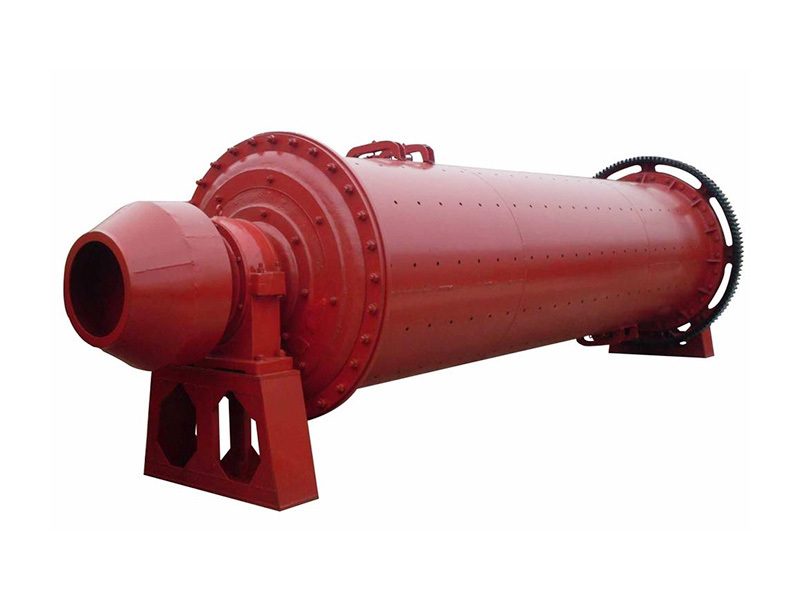
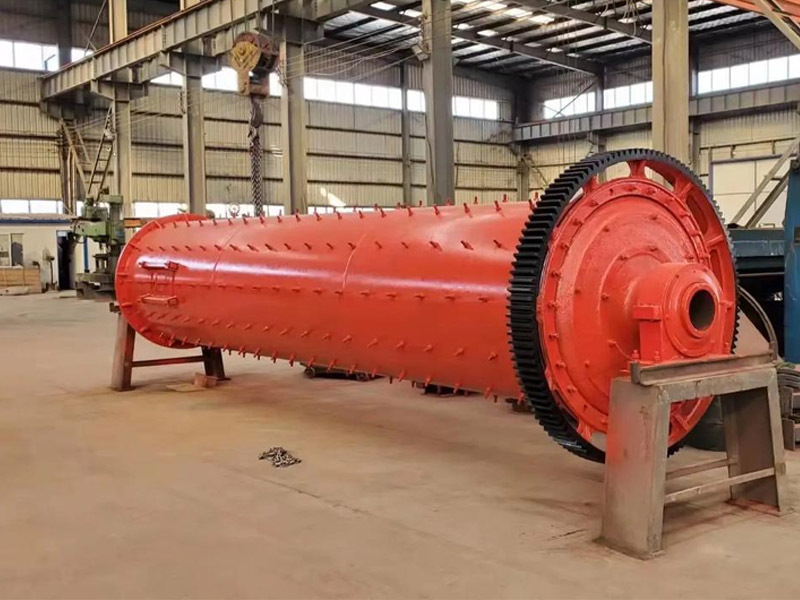
The high-fineness grinding mill is an industrial milling equipment primarily used to grind materials into high-fineness powder. Its core function is to achieve efficient and energy-saving ultra-fine powder production through optimized grinding processes. It is widely applied in the technological upgrading of industries such as cement and slag.
The high-fineness grinding process is simple, easy to operate, and requires low investment. It produces finished cement with a reasonable particle size, high early strength, and excellent performance in concrete applications. As a result, an increasing number of cement enterprises are adopting high-fineness grinding through new construction or technical retrofitting.
- Luoyang Hanfei Power Technology Co., Ltd
- Henan, China
- Possesses complete, stable, and efficient supply capabilities for Mill and their components.
- Information
High-Fineness Grinding Mill
The High-fineness Grinding Mill is a specialized industrial equipment designed for grinding materials such as cement and slag. Featuring an innovative closed-circuit circulation system, along with significant advantages including a simple process flow, convenient operation, and low investment cost, it has become a core piece of equipment in the building materials industry for achieving efficient production and energy savings. This mill is suitable for ultra-fine powder processing of various raw materials like cement clinker, slag, and fly ash. The specific surface area of the finished product can be precisely controlled within the range of 300-800 m²/kg, with a reasonable particle size distribution, effectively enhancing the early strength of cement and the overall performance of concrete. It is widely used in scenarios such as cement production line upgrades and processing of desulfurization by-products in the thermal power industry.
In terms of core structure and working principle, the advantages of the High-fineness Grinding Mill stem from its precise design configuration. The equipment is equipped with a screening compartment device and 8-12mm micro-grinding media, significantly improving grinding efficiency. Utilizing a closed-circuit circulation system under negative pressure, raw materials enter the grinding chamber where they are impacted and ground into fine powder by the grinding media, and are then conveyed by airflow to the rotary blade classifier located in the upper part of the unit. During this process, oversized particles that do not meet the fineness requirement are struck by the classifier blades and fall back into the grinding chamber for re-grinding. Qualified fine powder, carried by the air stream, enters the large cyclone collector and is discharged via the powder outlet pipe into the finished product storage silo. The separated air stream returns from the top of the collector to the blower inlet, re-entering the main air duct to participate in material conveyance, forming a closed-loop operation. A typical model, such as the φ3.0×13m three-compartment mill, has a total grinding media loading capacity of 110 tons, a main motor power of 1400 kW, and a designed hourly output of 38-40 tons, fully meeting the demands of large-scale production.
The core functions of the High-fineness Grinding Mill are reflected in efficient grinding and fineness control, energy savings and consumption reduction, improved process stability, and broad applicability. Specifically:
1.Efficient Grinding and Fineness Control: The use of a closed-circuit circulation system and a rotary blade classifier enables negative pressure operation, allowing precise control of the finished product's specific surface area within the 300-800 m²/kg range. Suitable for industries like cement, building materials, and metallurgy, it is equipped with a screening compartment device and micro-grinding media (8-12mm) to enhance grinding efficiency, achieving a typical hourly output of 38-40 tons.
2.Energy Savings and Consumption Reduction: By optimizing internal mill ventilation (air velocity controlled at 0.8-1.2 m/s), controlling the moisture content of incoming materials below 1.0%, and using grinding aids, energy consumption can be reduced by 20-35%. Post-retrofit, output can increase by 20-50%.
3.Process Stability and Ease of Maintenance: The three-compartment structure and material level adjustment devices reduce the risk of mill overfilling ("choking"). Routine maintenance includes screw tightening, lubrication system checks, and regular cleaning of compartment plates, with a medium repair cycle of 8-12 months, ensuring continuous production.
4.Broad Applicability: Beyond cement production, it can also be used for ultra-fine grinding of slag (e.g., a 3.2×13m unit outputting 30 t/h). The produced cement exhibits a reasonable particle size distribution, improving concrete performance, and is suitable for applications such as desulfurization in the thermal power industry.
The energy-saving and efficiency-enhancing solutions for the High-fineness Grinding Mill have been validated in actual production, effectively reducing production costs and increasing capacity.
• Enhancing internal mill ventilation is a core measure: For closed-circuit grinding, air velocity should be controlled at 0.8-1.0 m/s; for open-circuit grinding, at 1.0-1.2 m/s. Paired with a fan providing a total air volume of 27,600 m³/h, maintaining a negative pressure of 100-150 Pa at the mill inlet and 800-1200 Pa at the mill outlet, with damper opening maintained at 65%-70%, promptly removes water vapor and fine dust from the mill, preventing ball coating, ball packing, and grate slot blockage, thereby accelerating material flow.
• Strict control of moisture content and temperature of incoming materials is essential: Composite moisture should be controlled within 1.0%, and temperature maintained around 60°C, not exceeding 100°C at maximum, to prevent mill choking issues caused by excessive moisture in materials like gypsum and additives during the rainy season.
• Furthermore, adding grinding aids compliant with the JC/T667—2004 standard (e.g., KPY99, added at 0.3‰) can eliminate fine powder adhesion and agglomeration, resolving over-grinding issues in open-circuit grinding. This can achieve an output increase of approximately 10%, while maintaining cement specific surface area stably above 380 m²/kg.