



A Century of Technological Iteration | Development History and Technological Evolution of Steam Turbines at Home and Abroad
2026-07-29 00:00As the core power equipment of the modern energy industry, the steam turbine has evolved over more than two thousand years from a rudimentary concept and over a hundred years of industrial iteration, transforming from a simple steam toy into a million-kilowatt-class high-end power heavyweight. Looking at the global technology development trajectory, industrialized nations such as Europe, the United States, Russia, and Japan first achieved commercial deployment. In contrast, China's steam turbine industry started from scratch, caught up, and overtook, gradually forming a complete independent manufacturing system. Four major power equipment enterprises have shouldered the banner of domestic technological breakthroughs, bearing witness to the full spectrum of technological changes in the global power equipment industry.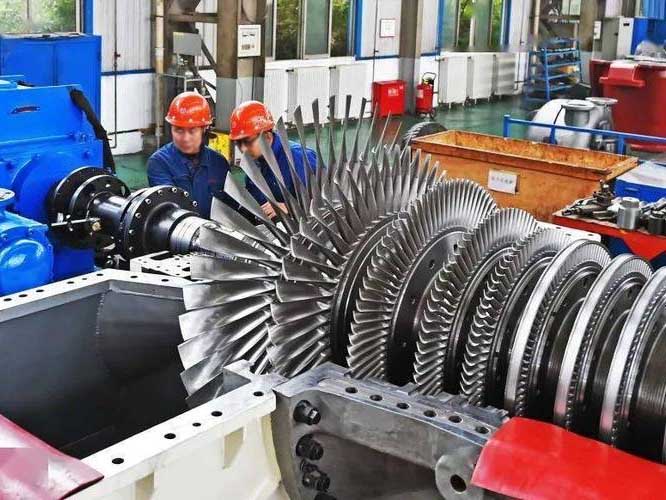
Tracing the earliest prototype of the steam turbine, as early as the 1st century AD, the aeolipile recorded by the Alexandrian scholar Hero relied on steam reaction force to achieve rotation, making it the first prototype of a reaction steam turbine in human history. In 1629, Italian scholar Giovanni Branca proposed the concept of using a steam jet to strike blades and rotate a wheel, laying the theoretical foundation for the impulse steam turbine. However, both devices remained at the experimental and toy level, unable to be put into industrial production, with a long distance still to go before practical application.
The modern steam turbine in the true sense was born at the end of the 19th century. In 1882, Swedish engineer Gustaf de Laval built the first 3.67 kW single-stage impulse steam turbine, overcoming key challenges such as nozzle design and high-speed rotor strength. Two years later, British engineer Charles Parsons developed the multi-stage reaction steam turbine, which greatly improved unit efficiency through multi-stage staged expansion. These two models respectively established the two major technical routes of impulse and reaction, opening the curtain on the industrial application of steam turbines. In the early 20th century, multi-stage impulse, velocity-stage, and radial-flow models successively emerged, with unit power continuously increasing. European and American countries quickly deployed steam turbines in power stations, ships, and chemical plants.
The overseas steam turbine industry experienced a technological explosion in large capacity and high parameters during the mid-to-late 20th century. In the 1960s, the capacity of mainstream units in Europe and America exceeded 500–600 MW. In 1972, Swiss ABB produced a 1300 MW dual-shaft full-speed steam turbine with steam parameters reaching 24 MPa and 538°C. West Germany and the former Soviet Union successively launched gigawatt-class large units while simultaneously advancing research on supercritical and ultra-supercritical steam parameters. Companies such as General Electric (GE) and Westinghouse in the United States, Toshiba, Hitachi, and Mitsubishi in Japan, Siemens in Germany, and Leningrad Metal Works in Russia formed differentiated technical routes, with impulse and reaction models developing in parallel. This continuously reduced unit power generation costs and improved unit thermal efficiency. Compared with medium and small units, large-capacity units could save nearly 20% in unit investment costs and significantly reduce coal consumption. Overseas manufacturers simultaneously deepened research in materials and rotor structure technologies, with mature solutions such as integral forged rotors, double-layer cylinders, and tilting pad bearings becoming widespread, supporting the long-term stable operation of high-parameter units.
Compared with the century-long technological accumulation abroad, China's steam turbine industry started relatively late. In 1955, Shanghai Steam Turbine Works produced China's first 6 MW steam turbine, officially filling the gap in domestic steam turbine manufacturing. Thereafter, the domestic industry progressed steadily. In 1964, Harbin Turbine Company's 100 MW unit was commissioned. In 1972, 200 MW units and in 1974, 300 MW units were successively put into operation. By the 1970s, domestically produced units already accounted for 70% of China's thermal power installed capacity. Starting in the 1980s, China embarked on a path of technology introduction. The 300 MW and 600 MW units introduced from Westinghouse were deployed at Shiheng and Pingwei power plants. In 2000, 800 MW supercritical units were introduced from Russia, rapidly narrowing the gap with advanced overseas technology.
After decades of accumulation, China has formed four core manufacturing enterprises: Shanghai Steam Turbine Works, Harbin Turbine Company, Dongfang Turbine Co., Ltd., and Beijing Beizhong Steam Turbine. These companies form the foundation of the domestic steam turbine industry. Shanghai Steam Turbine Works, as the cradle of China's steam turbine industry, entered into a joint venture with Westinghouse in 1995 and subsequently aligned with Siemens technology. Harbin Turbine Company, founded in 1956, independently developed China's first 25 MW, 50 MW, 100 MW, and 600 MW units. Dongfang Turbine, established in 1965, saw its main 600 MW series units enter batch production. Beizhong, transformed from a veteran heavy electrical machinery plant, focuses on producing 300 MW and 600 MW units. With 600 MW and 1000 MW units as their flagship products, the four major power equipment enterprises have completed a full cycle from technology introduction and digestion to independent innovation. Domestically produced units not only fully cover the domestic thermal power and industrial waste heat markets but are also exported in batches to many countries overseas, realizing the technology export of domestic power equipment.
Looking at the century-long global development of steam turbines, the core logic of development has always revolved around increasing unit capacity, raising steam parameters, and optimizing thermal energy utilization efficiency. Overseas countries relied on first-mover advantages to complete early technological accumulation and build mature large-capacity unit manufacturing systems. China's steam turbine industry took only over seventy years to traverse the development path that took developed countries over a century. Relying on the sustained efforts of the four major power equipment enterprises, China broke the technological monopoly of overseas companies, completing a leap from nothing to something, and from following to running alongside.
For domestic power equipment manufacturing enterprises, reviewing the global development history of steam turbines not only provides a clear grasp of the industry's technological iteration patterns but also reveals the development advantages and room for improvement of domestic equipment. In the future, with the continuous research and development of ultra-supercritical units, ultra-long blades, and new high-temperature resistant alloy materials, domestically produced steam turbines will continue to break through technological boundaries. Leveraging a mature independent manufacturing system, they will persistently strive in the fields of industrial waste heat utilization, combined heat and power, and overseas industrial supporting services, continuously promoting the high-quality development of the domestic power equipment industry.