

- Home
- >
- Products
- >
- Torsion Support
- >
Torsion Support
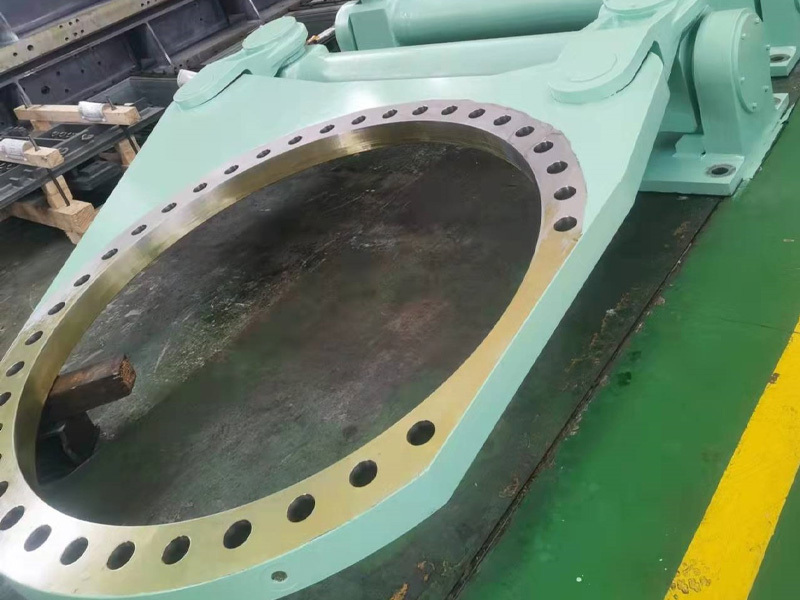
Torsion Support (Slewing Bearing)
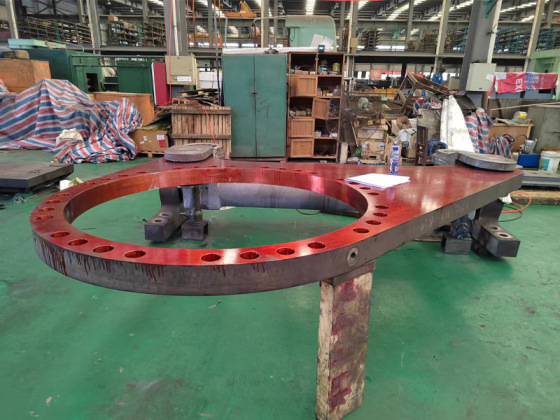
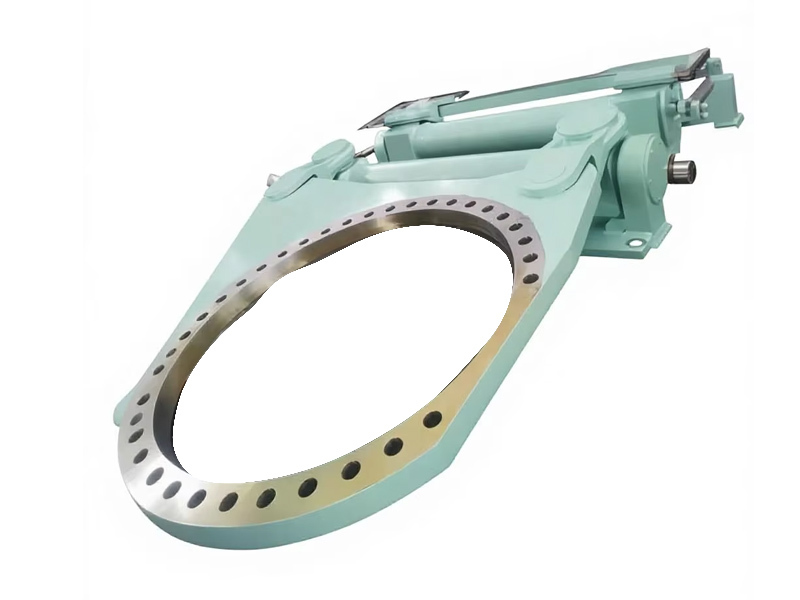
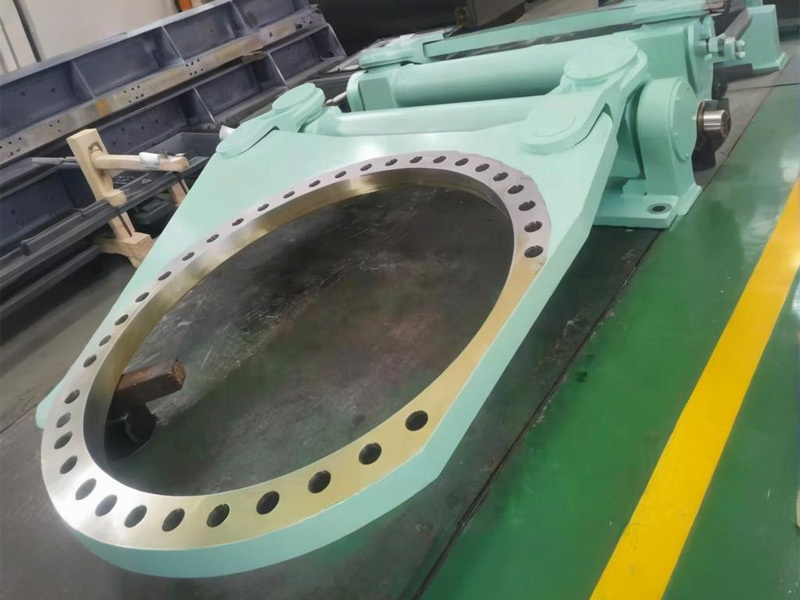
The torsion support (also known as a slewing bearing) is a large-scale precision component that integrates rotation, support, and force transmission functions. Its core role is to simultaneously withstand axial loads, radial loads, and overturning moments, providing stable support and precise positioning for rotating parts of heavy machinery, enabling limited oscillation or 360° continuous slewing. It adopts an integrated annular structure composed of an inner ring, outer ring, rolling elements, and a cage. Some models incorporate gear rings and seals. By utilizing rolling friction to reduce resistance, it is suitable for applications requiring low-speed, heavy-duty operation and high precision.
This component is widely used in fields such as wind power, construction machinery, and port equipment, with significant customization for different scenarios. Routine maintenance requires regularly applying specialized lubricating grease, checking bolt tightness and seal integrity to prevent failures such as raceway wear and gear ring pitting. With technological advancements, high-end models integrate intelligent monitoring modules, facilitating predictive maintenance and driving equipment development towards larger scale and greater intelligence.
- Luoyang Hanfei Power Technology Co., Ltd
- Henan, China
- Possesses complete, stable, and efficient supply capabilities for Torsion Support
- Information
Torsion Support
Torsion support is a type of precision mechanical component that combines torsional load-bearing capacity with rotational adaptability. It is widely used in the power transmission and structural support systems of heavy-duty equipment. Its core functions are to resist torsional stress generated during operation, balance reverse moments, and simultaneously provide stable positioning for rotating components, accommodating oscillating or slewing requirements under various working conditions. Compared to dedicated anti-torsion components, it offers both flexible compensation and rigid load-bearing capabilities, making it suitable for low-speed, heavy-duty applications, frequent start-stop cycles, and combined loading scenarios. It is indispensable in fields such as construction machinery, wind power equipment, port machinery, and metallurgical equipment, directly impacting the operational stability, transmission efficiency, and service life of core components of the entire machine.
The structural design of torsion supports must balance torsional strength with adaptability and flexibility. Common types include integral annular, hinged, and combined designs. Among these, the integral annular type is the most widely used due to its uniform load distribution and strong stability. Its core components consist of the load-bearing base, rolling elements, sealing/protection components, and connection structures. The load-bearing base is typically made from high-strength alloy steel through forging and heat treatment processes to ensure torsional toughness and wear resistance. The rolling elements are selected based on the load type—using ball, roller, or needle roller configurations—paired with optimized raceway designs to achieve multi-directional load dispersion. The sealing components are made of oil-resistant, wear-resistant composite materials that effectively isolate dust, contaminants, and moisture, protecting the internal components from corrosion and extending the service life.
The core of its operation is to achieve torque balance and stable rotation through "load dispersion + flexible compensation." During equipment operation, the torsional moment generated by power transmission acts on the support component. The load-bearing base uniformly distributes the torque throughout the structure, avoiding localized stress concentrations. The rolling elements replace sliding friction with rolling friction, significantly reducing operational resistance and wear, while simultaneously adapting to minor component misalignments and installation deviations, compensating for positioning errors caused by deformation. In response to instantaneous overloads or torque fluctuations, the torsion support can cushion impacts through its own structural elastic deformation, preventing torque from being directly transmitted to core drive components. This avoids rigid damage to parts such as gears and bearings, ensuring smooth power transmission.
Different industries have distinct operational condition requirements that necessitate customized designs for torsion supports. In the wind power sector, supports must adapt to low temperatures, high humidity, and highly corrosive environments, emphasizing enhanced weather resistance, sealing performance, and fatigue strength to meet long-term outdoor operational demands. In construction machinery, the focus is on withstanding frequent impact loads and dust ingress, requiring optimization of base thickness and raceway wear resistance to ensure structural stability under complex conditions. In precision equipment applications, the priority is high-accuracy positioning, achieved through precision machining and preload adjustment to enable low-noise, low-vibration operation suitable for micron-level control requirements. Common failures primarily include wear of rolling elements, seal failure, and base deformation, mostly caused by improper lubrication, excessive load, or installation deviations.
Proper daily maintenance and standardized installation are crucial for extending the service life of torsion supports. During installation, coaxiality and levelness must be strictly calibrated, and connecting components tightened to the specified torque to avoid stress concentration caused by misalignment. During routine operation, specialized lubricants should be applied periodically according to the working conditions to ensure adequate lubrication of the rolling elements and raceways. Seal surfaces should be regularly cleaned of debris, and the integrity of protections checked. Potential issues such as component wear or seizing should be promptly identified through temperature monitoring, vibration analysis, and other means, allowing for proactive repair or replacement. With technological advancements, intelligent torsion supports equipped with integrated condition monitoring modules for real-time alerts are becoming increasingly common, providing support for efficient equipment maintenance and promoting the development of heavy-duty equipment towards greater precision and longevity.