


Analysis of Seven Steam Turbine Types: Selecting on Demand for Efficient Waste Heat Utilization
2026-11-19 00:00In energy recovery projects across the metallurgy, chemical, building materials, and thermal power industries, steam turbines have become the core equipment for thermal energy conversion thanks to their maturity and reliability, wide output range, and well-established operation and maintenance systems. Many project owners find it easy to confuse the applicable scenarios of different machine types during the solution coordination stage, and blind selection can result in insufficient power generation, wasted thermal energy, or equipment redundancy. Familiarity with the characteristics of the seven mainstream steam turbine types is the foundation for developing sound waste heat power generation and combined heat and power (CHP) solutions.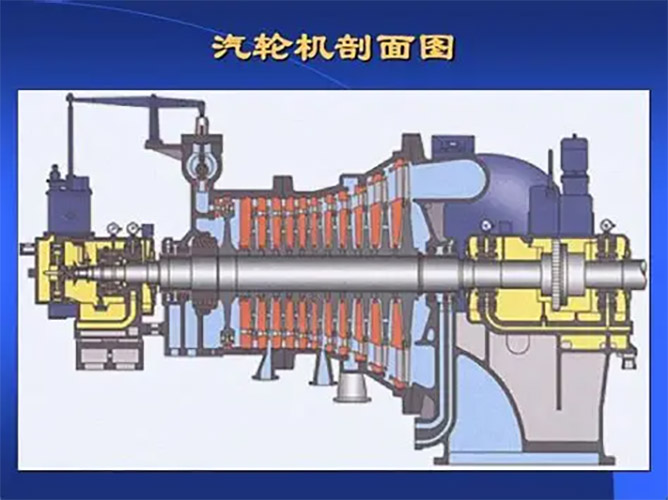
Impulse steam turbines use nozzles to fully expand and accelerate the steam, relying on the high-speed steam flow to impact the blades and drive the rotor in rotation, with the steam expansion process concentrated mainly inside the stationary nozzle blades. They feature a simple structure, fast start-up response, and low manufacturing and maintenance difficulty. They are suitable for small and medium-sized generator units and stable low-pressure steam conditions, and are also a commonly used machine type in many waste heat retrofit projects. Their shortcoming is limited cycle efficiency at equivalent parameters, making them less competitive in large-capacity, long-term continuous operation scenarios.
In reaction steam turbines, steam expands simultaneously in both the stationary and moving blade passages. The steam flow generates both an impact force and a reaction thrust that drives the rotor. Stage efficiency is higher and flow losses are smaller. This type is mostly used for main units in large power stations and high-parameter, high-capacity units, and is suitable for scenarios requiring stable, year-round full-load operation. It places higher demands on machining precision and assembly workmanship.
Condensing steam turbines are the mainstay machine type for pure power generation scenarios. Exhaust steam is sent into a condenser to create a vacuum low-pressure environment, maximizing the steam enthalpy drop and converting as much thermal energy as possible into electrical energy. They supply almost no process steam externally, with power generation as the core objective. They are widely used in large power stations and waste heat power plants with power generation needs only. The upper limit of power generation efficiency is high, but the entire system requires well-established circulating cooling water and condensing equipment.
Back-pressure steam turbines have exhaust pressure higher than atmospheric pressure, and the steam after performing work is supplied directly to production processes or heating. They are a typical CHP machine type. They do not have a condenser, making the system simpler and the comprehensive energy utilization rate higher. They are suitable for enterprises such as chemical plants, paper mills, and district heating parks that need both electricity and a continuous, stable supply of process steam. The returns depend on whether the heat load remains stable over the long term.
Extraction steam turbines accommodate the dual needs of power generation and steam supply. Steam at a specified pressure can be extracted from intermediate stages of the turbine for process use, while the remaining steam continues to expand downstream to generate power. Extraction pressure is adjustable and flexibility is outstanding, enabling adaptation to complex conditions where power and steam loads fluctuate simultaneously. They are the preferred solution for complex industrial parks.
In axial-flow steam turbines, steam flows along the axial direction of the rotor. This is currently the mainstream machine type on the market, with an extremely wide power coverage—from several-hundred-kilowatt waste heat units to tens-of-megawatts power station units. Aerodynamic design is mature and the upper limit of single-unit output is high. The vast majority of power stations and large waste heat projects choose the axial-flow structure.
Radial-flow steam turbines, also called radial-inflow turbines, have steam entering and exiting along the radial direction of the rotor. They feature a compact structure and small size with low footprint requirements, making them suitable for special conditions with limited space and small to medium power. They offer unique advantages in small-scale waste heat recovery and distributed energy projects.
No single steam turbine can adapt to all operating conditions. The core of selection is to first understand the steam parameters, flow rate, whether there is a heating demand, site conditions, and annual operating hours. Our company can provide thermal calculations and complete solutions for different turbine types—condensing, back-pressure, and extraction—based on the customer's heat source conditions, balancing investment, power generation, and thermal energy utilization value according to actual project needs.
In response to the continuing demand for industrial energy-saving retrofits under the "dual carbon" goals, steam turbines are also continuously iterating and upgrading, with new material applications, intelligent monitoring systems, and flow path optimization retrofits steadily improving unit performance. Only through reasonable selection and precise matching can waste heat resources truly achieve efficient and stable conversion, helping enterprises reduce overall energy consumption.