



High-Performance Steam Turbines Gain Popularity in Steel Plants, Addressing Industry Pain Points and Facilitating Green Transformation
2026-04-12 00:00The principle of gas power generation is akin to an "industrial-scale version" of a breeze driving a paper pinwheel to spin, and the key to achieving efficient steam-to-electricity conversion lies precisely in this high-performance steam turbine. In the field of gas power generation for steel and metallurgy, large-scale units above 135 megawatts have long widely adopted ultra-supercritical parameters, demonstrating significant efficiency advantages. However, within the "core range" of 80 to 120 megawatts, a long-standing dilemma has persisted: while ultra-supercritical technology offers outstanding efficiency, its investment costs remain prohibitively high—akin to equipping a family car with an aircraft engine, resulting in a low cost-performance ratio. Conversely, traditional subcritical technology suffers from insufficient energy efficiency, struggling to keep pace with industrial low-carbon transformation efforts, resulting in relatively weak power output.
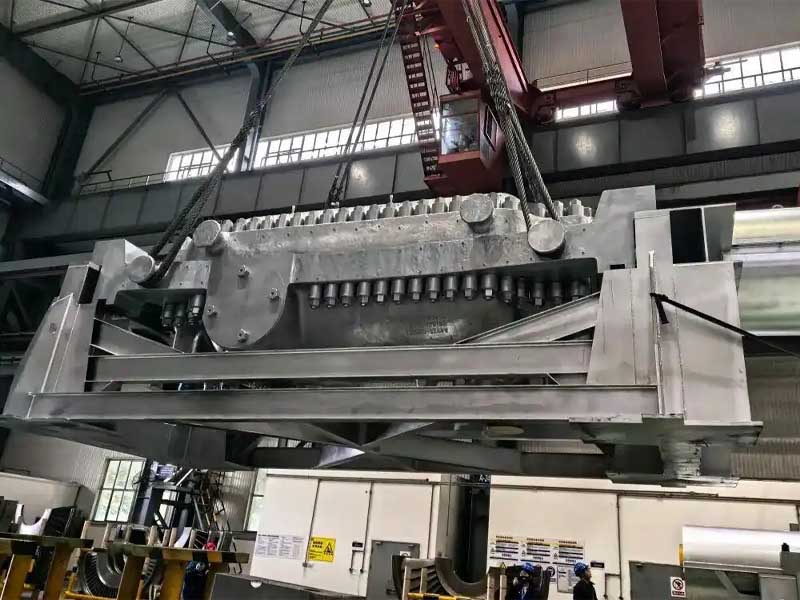
Faced with this industry "hard nut," the R&D team focused their efforts precisely, targeting the intermediate technical zone "above subcritical but not yet ultra-supercritical," achieving a breakthrough in innovation. Drawing on the mature technical experience of 150-megawatt-class ultra-supercritical units, the R&D team broke industry conventions by applying the high parameter combination of 16.7 MPa and 600°C to a 100-megawatt-class unit for the first time. This is equivalent to equipping a midsize SUV with the engine tuning technology of a top-tier sports car. It retains the high-efficiency genes of ultra-supercritical units while preserving the mature stability of subcritical units, maximizing energy efficiency while controlling costs. This successfully addressed the industry pain point for 100-megawatt-class units being "neither high enough nor low enough," propelling gas power generation units of this class into the "600°C era."
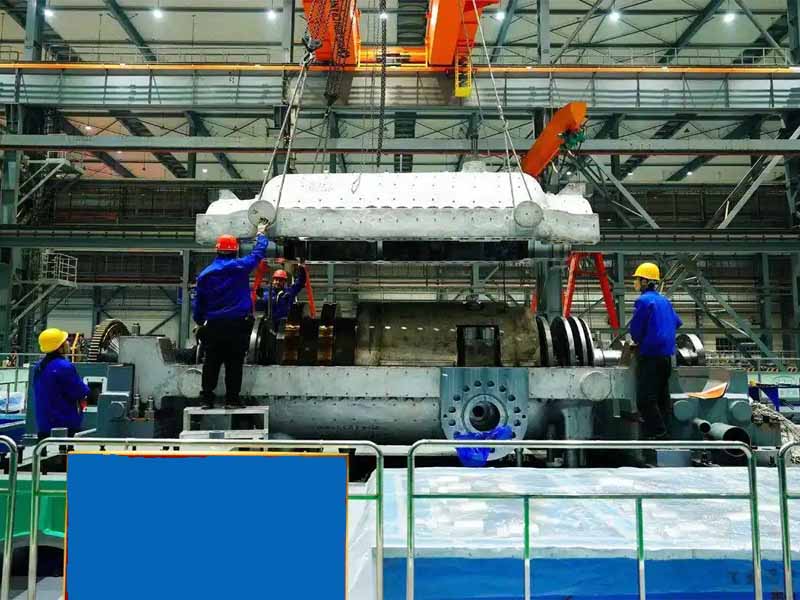
Beyond the breakthrough in high parameters, the unit's internal design also demonstrates meticulous craftsmanship. Its flow system employs the latest independently developed multi-stage, small enthalpy drop, high-efficiency reaction flow technology. Every blade stage and every sealing point is precisely calculated to minimize steam leakage and energy loss, much like building sophisticated sluice gates for a rushing river, ensuring every unit of energy is fully utilized. Simultaneously, the R&D team thoroughly integrated the actual operational needs of steel plants, optimizing the unit's control system to ensure stable operation and flexible regulation. Its ease of operation is far superior to conventional subcritical units, earning widespread recognition from operation and maintenance personnel. Addressing the space constraints and dense piping networks typical of steel plant sites, the unit adopts a "two-cylinder, single-exhaust, compact structural design," significantly reducing its footprint, effectively lowering on-site construction costs, and maximizing space utilization.
A superior design blueprint requires the support of exquisite manufacturing processes. To create a power equipment that is both robust and adaptable, the production phase utilizes digital assembly technology. This enables precise control of component alignment and flow clearances, achieving perfect component matching with micron-level precision. Every process is strictly quality-controlled, ensuring each step is executed with accuracy, embodying the philosophy of lean manufacturing. During project execution, the R&D and production teams enhanced integrated project planning and management, coordinating all stages from technology development, material procurement, to manufacturing, ensuring seamless process integration. This effort set a new industry record by delivering a newly developed model within 12 months. From the factory shipment of core components like the medium-low pressure rotor to the successful commissioning of the unit, it took only 40 days, demonstrating high-efficiency execution to fulfill the delivery commitment and overcoming the triple challenge of high development difficulty, tight delivery schedule, and stringent quality requirements.
At 19:45 on March 20, the unit successfully achieved grid-connected operation, with excellent operating parameters and stable performance, demonstrating significantly improved economics compared to traditional 100-megawatt subcritical units. On the day of commissioning, the client specially presented a commemorative banner, expressing their high recognition for this equipment in a simple yet profound manner. Today, this "power heart" of the steel plant continues to operate smoothly and efficiently, recovering and utilizing industrial gas thermal energy. It assists the steel plant in achieving clean power generation and reducing pollution emissions, lowering the enterprise's operational costs while promoting green transformation, writing a new chapter in how robust industrial equipment empowers industry upgrade with its formidable capabilities.