



Analysis of Process Characteristics and Comprehensive Value of Waste-to-Energy
2026-06-13 00:00Waste-to-energy is currently the core process for the harmless, volume-reducing, and resource-recovering treatment of municipal solid waste in urban and rural areas. With its stable and mature operational system, it has become the mainstream alternative to traditional landfilling. Compared to landfill disposal, this process can rapidly decompose household waste, eliminating various pollution issues caused by waste accumulation while simultaneously recovering and utilizing thermal energy. It offers dual value in both ecological protection and resource utilization, making it widely applied in the solid waste treatment sector.
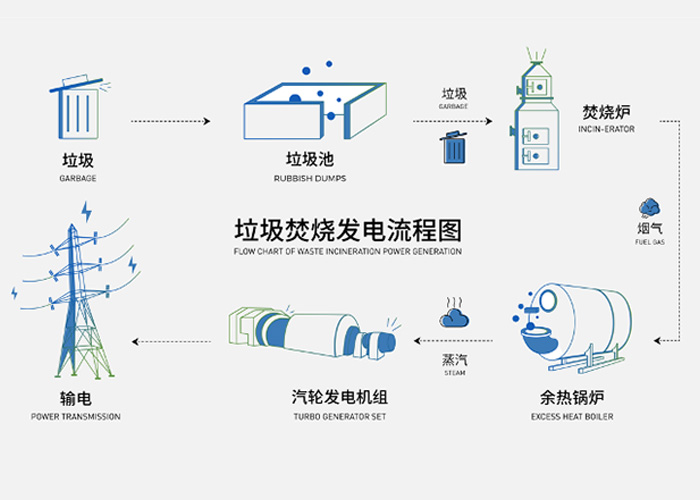
The complete waste-to-energy system consists of five core stages, each working in synergy to form a closed-loop process for energy conversion and solid waste disposal. After household waste enters the facility, it undergoes pre-treatment steps such as unloading, sorting, crushing, and dewatering to remove non-combustible impurities and optimize the calorific value of the waste. The processed material is then fed into a mechanical grate incinerator, where it is fully combusted at temperatures above 850°C, thoroughly decomposing harmful organic matter and significantly reducing waste volume. The high-temperature flue gas generated from combustion is directed into a waste heat boiler, where it heats water to produce high-temperature, high-pressure steam, providing the core power medium for the electricity generation stage.
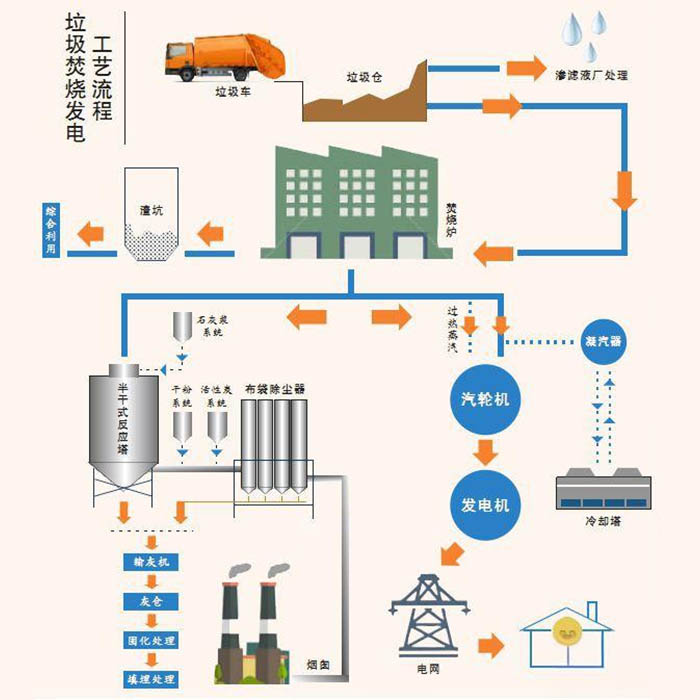
When the steam is introduced into the steam turbine generator set, it drives the turbine rotor at high speed, converting thermal energy into mechanical energy, which is then transformed into electrical energy by the generator. The generated electricity is divided into two parts: for on-site use within the plant and for grid export, achieving high resource utilization efficiency. As the core power equipment, the adaptability of the steam turbine directly determines power generation efficiency. Due to the complex composition and frequent calorific value fluctuations of household waste, the operating conditions of waste-to-energy plants differ significantly from those of traditional thermal power plants. The supporting units must possess strong adaptability to variable operating conditions and be capable of handling low-calorific heat sources with fluctuating parameters. Small to medium-sized projects typically employ condensing steam turbines ranging from 0.3MW to 50MW.
A complete waste-to-energy power plant is equipped with multiple auxiliary systems, including flue gas purification, water treatment, slag removal, and dust control modules. The flue gas produced during combustion undergoes multiple treatment processes such as denitrification, dust removal, desulfurization, and activated carbon adsorption before being discharged up to standard. Bottom ash can be recycled and processed as raw material for construction materials, achieving full-chain resource utilization of solid waste and minimizing waste discharge to the greatest extent.
In terms of ecological benefits, waste-to-energy offers significant advantages. After incineration, only 15%–20% of usable bottom ash remains, with merely 2%–3% of fly ash requiring deep burial disposal. Compared to traditional landfilling, this saves over 80% of land resources. High-temperature incineration thoroughly eliminates pathogens in the waste, preventing secondary pollution caused by waste decomposition.
The resource recovery and carbon reduction value of this process are considerable. Each ton of household waste can generate 300 to 500 kWh of electricity, replacing traditional coal-fired power generation. Incinerating one ton of waste can reduce carbon dioxide emissions by 208 kg to 283 kg. This not only effectively addresses issues such as waste accumulation, soil pollution, and groundwater contamination but also converts municipal solid waste into green electricity integrated into the grid, contributing to the optimization of urban energy structures. Additionally, the industry operates under a comprehensive regulatory framework, with real-time 24-hour online monitoring of flue gas pollutants and public disclosure of data. Combined with public access mechanisms for environmental protection facilities, this effectively mitigates the NIMBY (Not In My Backyard) effect.
From an industrial development perspective, the waste-to-energy industry delivers substantial social benefits. Project construction and operation create employment opportunities and strengthen local environmental protection industry ecosystems. Currently, the domestic industry is gradually entering a mature phase, though it faces market-oriented challenges such as subsidy reductions and regional development imbalances. Leveraging years of technological accumulation, China’s waste-to-energy processes have achieved full localization, with mature and complete technical systems capable of large-scale international export. At this stage, China’s mature technologies and engineering models are increasingly being deployed in international markets, with multiple overseas projects successfully implemented. This effectively addresses the technological gaps in solid waste energy recovery in countries along the Belt and Road Initiative, contributing to the continuous advancement of global environmental governance systems.